

Freshwater Monitoring
If your stewardship organization collects temperature and flow data during extreme drought conditions, download the monitoring protocols below for practical support.
Local First Nations and stewardship groups across B.C. collect invaluable data on stream temperature and flow, which can inform salmon conservation and management decisions. To integrate these efforts and help drive action for salmon, PSF has released new resources covering best practices for every budget and capacity level.
EXPLORE PROTOCOLS
Review the suite of monitoring protocols and identify approaches or tools that fit your watershed, budget, and capacity.
ADAPT MONITORING
Use these resources to make adjustments that improve data quality and ensure your observations can be integrated into province-wide efforts.
SHARE DATA
Submit your data to contribute to salmon management decisions and help fill critical information gaps across B.C. and the Yukon.
Why monitoring protocols?
Monitoring groups across the province operate with different budgets, different technical capacities, and different priorities. These protocols are designed to reflect that reality.
These protocols support data contributions to PSF’s Stream Temperature Database and PSF’s Pacific Salmon Explorer (PSE), consolidating stream temperature and flow records from over 1,500 monitoring sites across B.C. and the Yukon.
Standardized, comparable data helps partners:
- Inform real-time emergency response decisions
- Support salmon habitat restoration and recovery planning
- Build a long-term record of potential climate impacts on salmon habitats
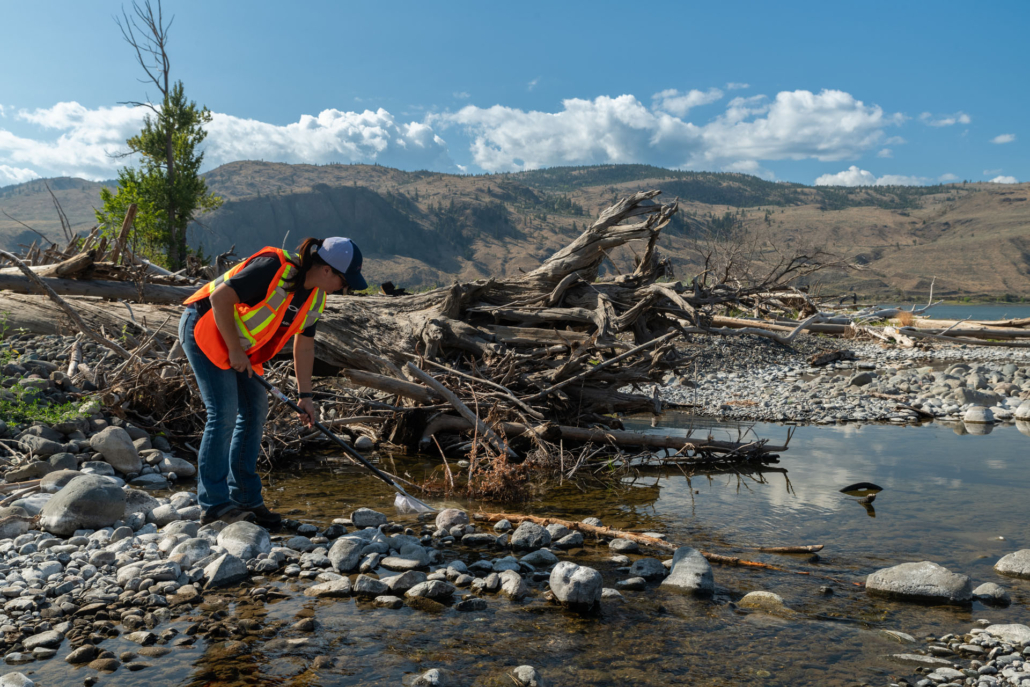
MONITORING PROTOCOLS
Water Temperature Monitoring
Water Level Monitoring
Discharge Monitoring
News and Updates
 https://psf.ca/wp-content/uploads/2026/05/2023-10-17_Bridge-Rapids_Brandon-Deepwell-8-scaled.jpg
1920
2560
Oscar Beardmore-Gray
/wp-content/uploads/2022/04/PSF-Logo-2022-min.png
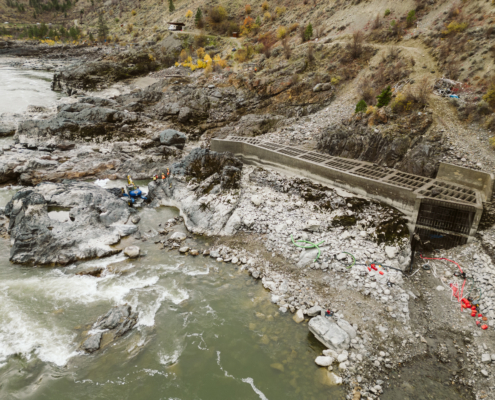
Oscar Beardmore-Gray2026-06-05 12:03:252026-07-09 11:37:32Warm winter, low snowpack on B.C.’s south coast put salmon at risk this summer
https://psf.ca/wp-content/uploads/2026/05/2023-10-17_Bridge-Rapids_Brandon-Deepwell-8-scaled.jpg
1920
2560
Oscar Beardmore-Gray
/wp-content/uploads/2022/04/PSF-Logo-2022-min.png
Oscar Beardmore-Gray2026-06-05 12:03:252026-07-09 11:37:32Warm winter, low snowpack on B.C.’s south coast put salmon at risk this summer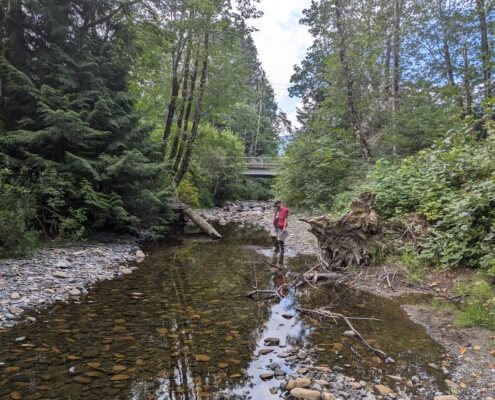 https://psf.ca/wp-content/uploads/2025/12/PXL_20240816_170136175-scaled.jpg
1542
2048
Chloe Fraser
/wp-content/uploads/2022/04/PSF-Logo-2022-min.png
Chloe Fraser2025-12-04 09:46:292026-07-31 13:48:24Smarter Drought Monitoring for Salmon
https://psf.ca/wp-content/uploads/2025/12/PXL_20240816_170136175-scaled.jpg
1542
2048
Chloe Fraser
/wp-content/uploads/2022/04/PSF-Logo-2022-min.png
Chloe Fraser2025-12-04 09:46:292026-07-31 13:48:24Smarter Drought Monitoring for Salmon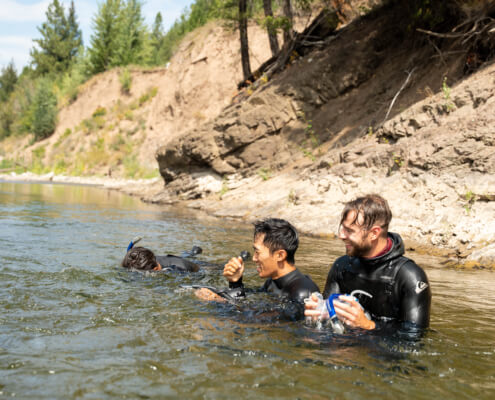 https://psf.ca/wp-content/uploads/2025/10/coldwater-last-day-Nicole-Van-Zutphen-12-scaled.jpg
1366
2048
Braela Kwan
/wp-content/uploads/2022/04/PSF-Logo-2022-min.png
Braela Kwan2025-10-23 09:00:422025-11-17 09:18:07Finding the ‘cold’ in the Coldwater River
https://psf.ca/wp-content/uploads/2025/10/coldwater-last-day-Nicole-Van-Zutphen-12-scaled.jpg
1366
2048
Braela Kwan
/wp-content/uploads/2022/04/PSF-Logo-2022-min.png
Braela Kwan2025-10-23 09:00:422025-11-17 09:18:07Finding the ‘cold’ in the Coldwater RiverPSF is thankful for the generous support provided by the former British Columbia Salmon Restoration and Innovation Fund (co-funded by the Government of Canada and the Province of British Columbia). Thank you to Russell Smith of WaterSmith Inc., Dan Moore, and Natalie Young for their work and input.