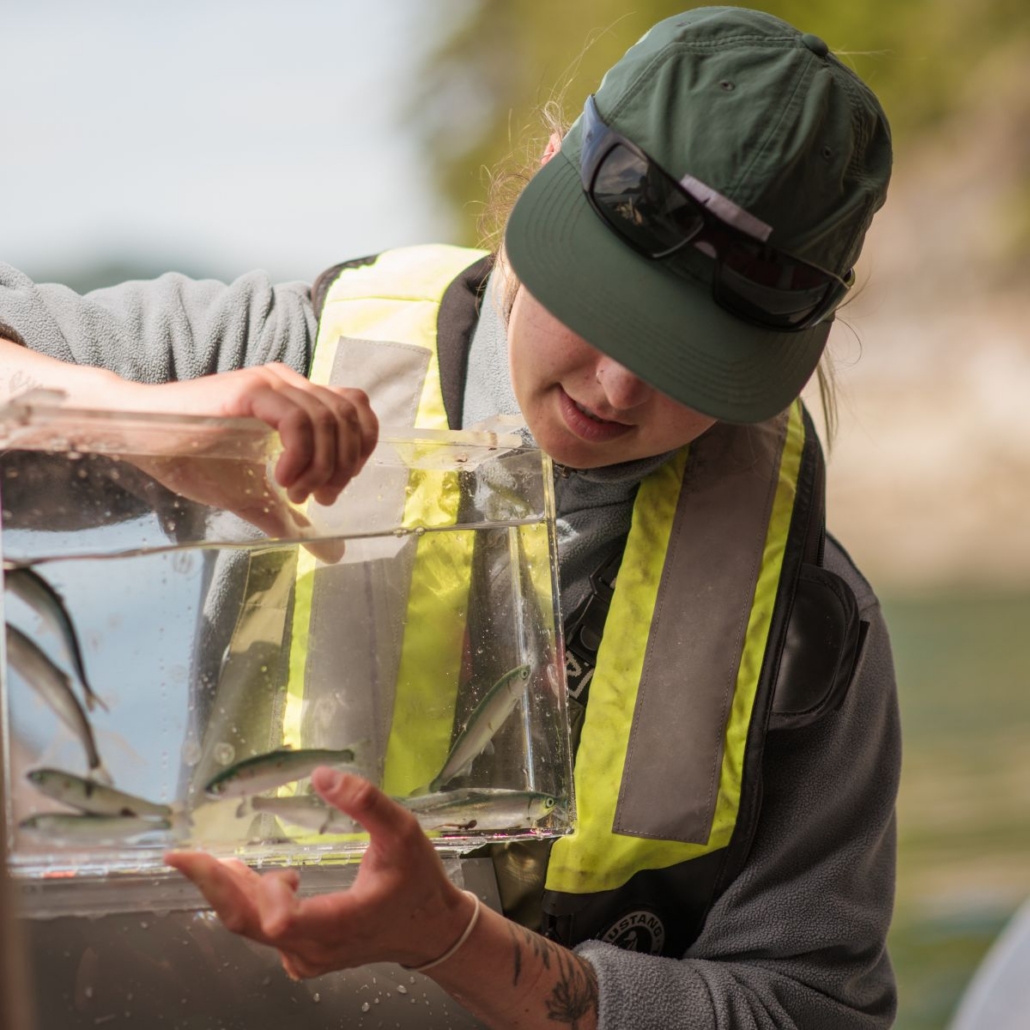
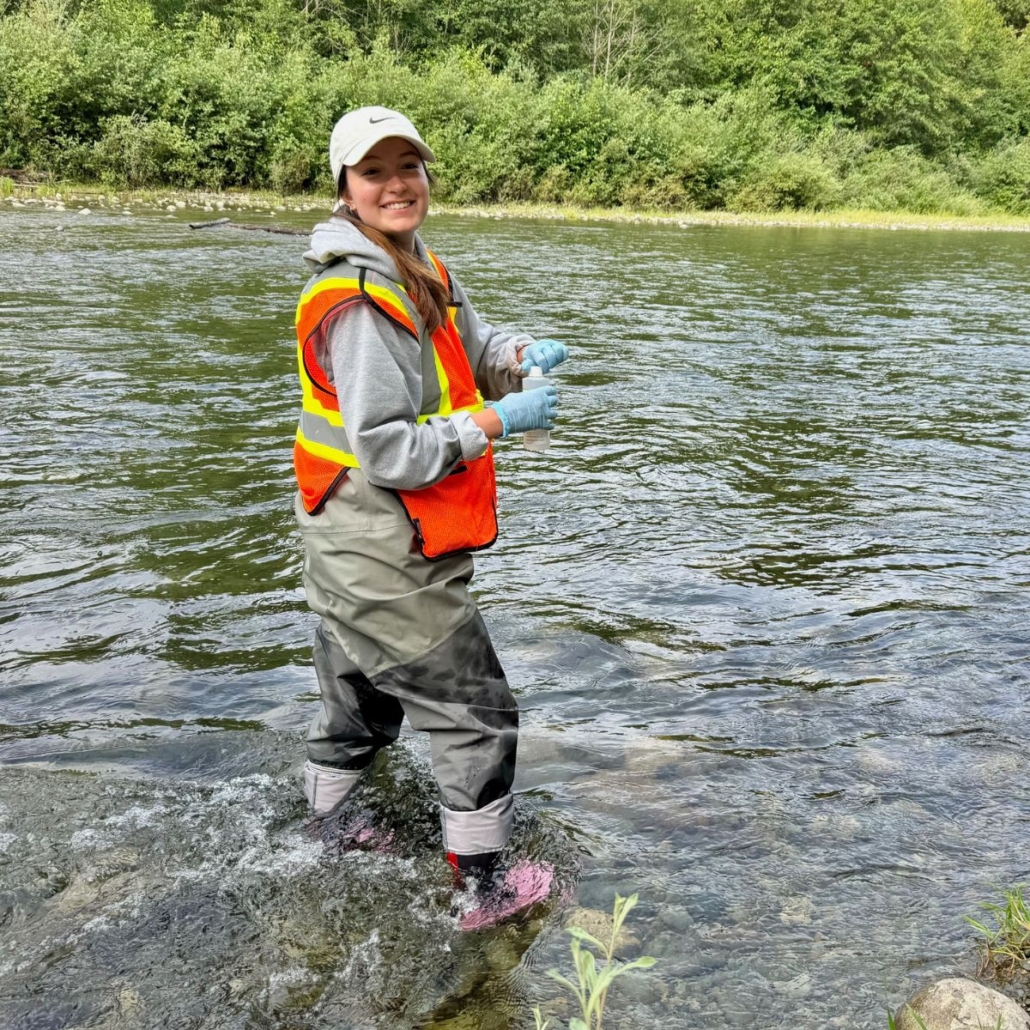
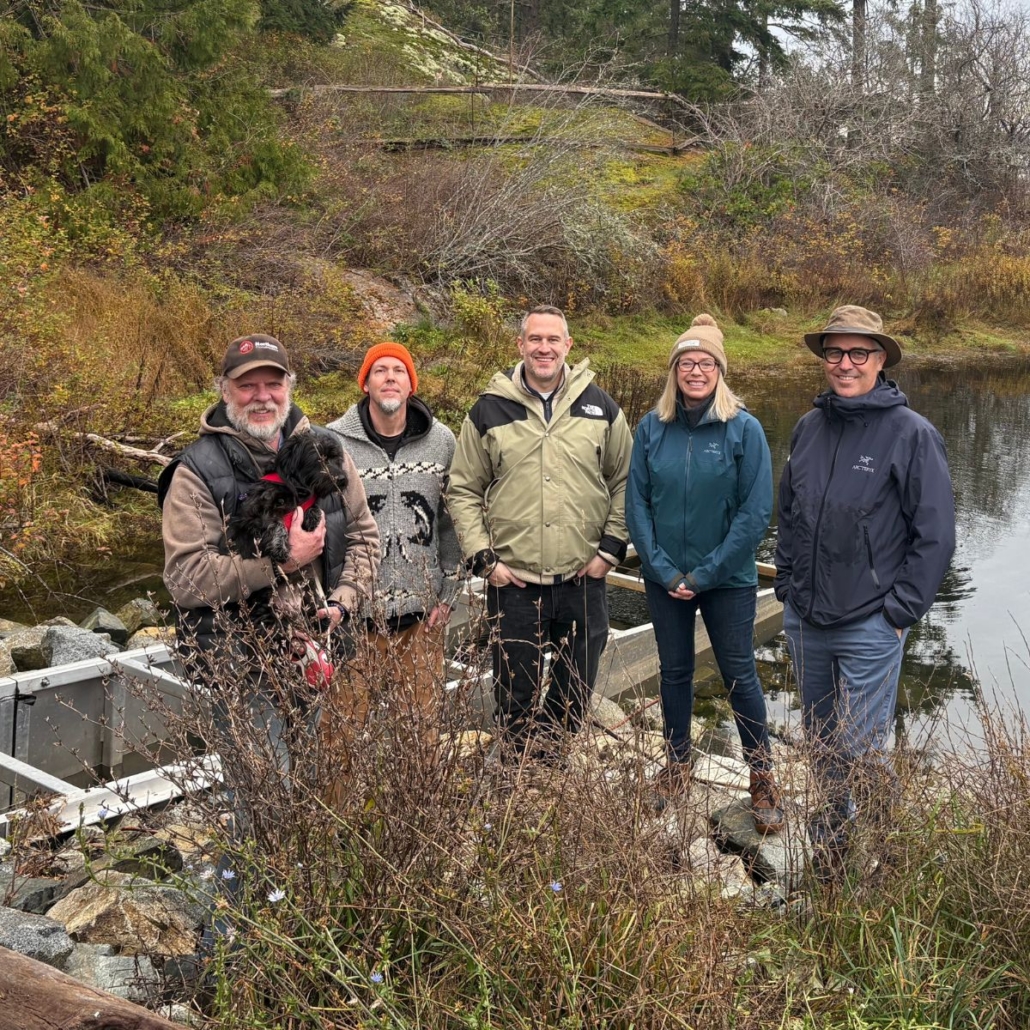
Sampling wild juvenile salmon in the Discovery Islands, a key migratory corridor for Fraser River salmon.
Photo: Chelsea Pope

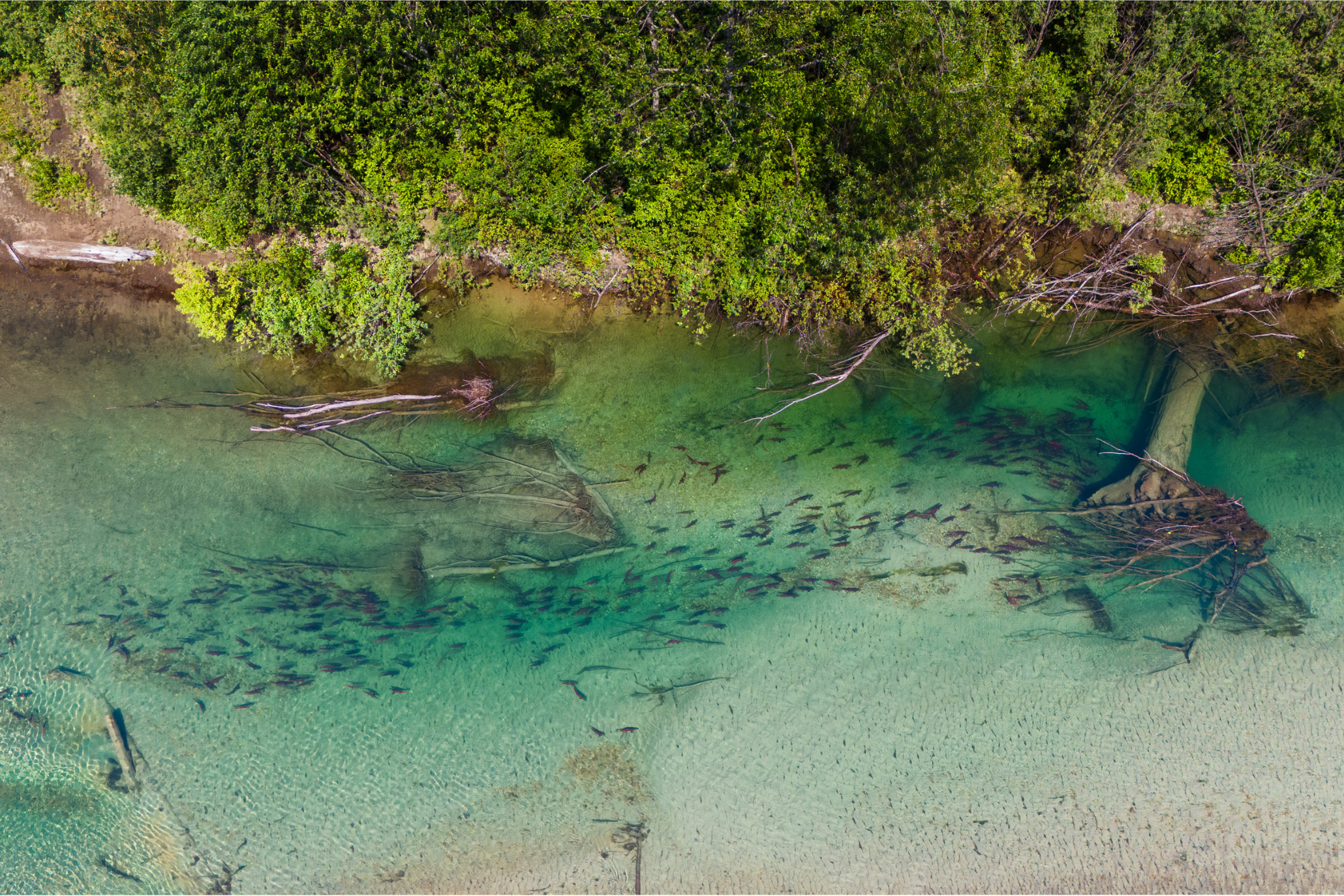
Today, Pacific salmon face widespread declines and complex challenges. Still, they keep coming back.
2025 gave us reasons to be hopeful. Nearly 10 million sockeye returned to the Fraser River — three times the forecast. Yet our second State of Salmon report found that two-thirds of Pacific salmon in B.C. and the Yukon are in long-term decline, signalling that we’ve reached a tipping point.
Through science, action, and influence, PSF is meeting the moment for salmon — helping struggling populations recover while ensuring stable populations remain resilient. In 2025, more than 1,000 new donors joined our community, a milestone that reflects the growing momentum behind our shared mission.
Together, we will continue advancing salmon recovery through the collective action that has defined PSF for decades.
— Michael Meneer, CEO and President, Pacific Salmon Foundation
Read the full CEO message and download the 2025 Impact Report here.

Special thanks to our generous supporters for advancing game-changing work to save and restore wild Pacific salmon.
PSF is at the forefront of the research that informs the actions required to help salmon survive and thrive, and a voice for salmon in the decisions that shape their future. Our work focuses on three key areas: science, action, and influence.
MONITORING JUVENILE SALMON BEFORE AND AFTER FISH FARMS
In 2025, PSF launched a multi-year monitoring program for wild juvenile salmon in the Discovery Islands, a key migratory corridor east of Campbell River where open-net-pen Atlantic salmon farms were phased out between 2020 and 2021.
Continuing work previously led by the Hakai Institute, researchers are tracking how wild salmon respond now that the farms are gone.
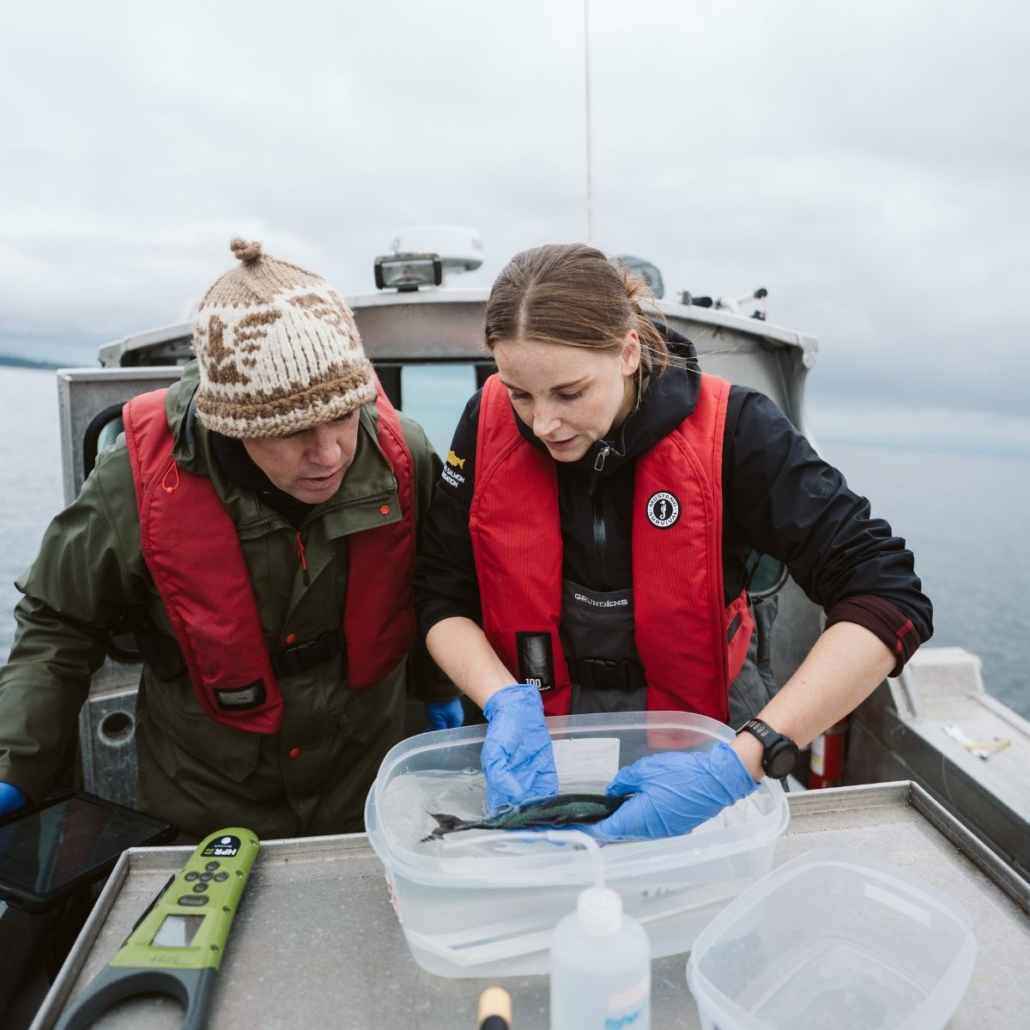
Between May and July, the team sampled 2,995 fish across 32 locations, testing for pathogens, counting sea lice, and assessing environmental conditions as salmon migrated past the now-inactive sites.
Learn more about PSF’s monitoring in the Discovery Islands.
This work is co-led by PSF and the University of Toronto, with critical support from Raincoast Research Society and funding from the Natural Sciences and Engineering Research Council of Canada. Special thanks to the North Family Foundation.
Photo: Chelsea Pope
Open-net pens are set to be banned in B.C. by 2029, following more than a decade of PSF-led research and dozens of peer-reviewed studies linking Atlantic salmon farms to risks for wild Pacific salmon.
The fieldwork will continue annually, building a robust before-and-after dataset on the impacts of fish farms on wild Pacific salmon.
Photo: Chloë Fraser
COMMUNITY-LED CONSERVATION ELEVATED THROUGH 160+ PROJECTS
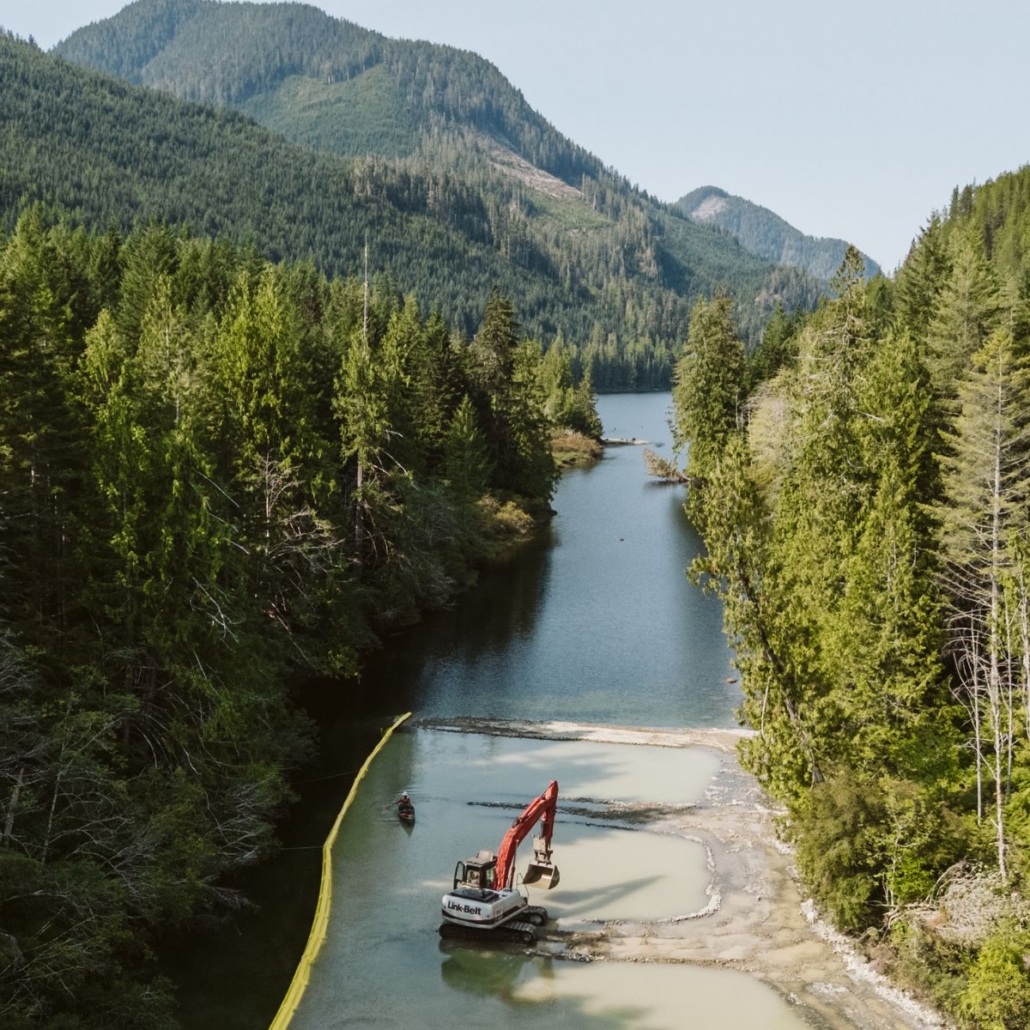
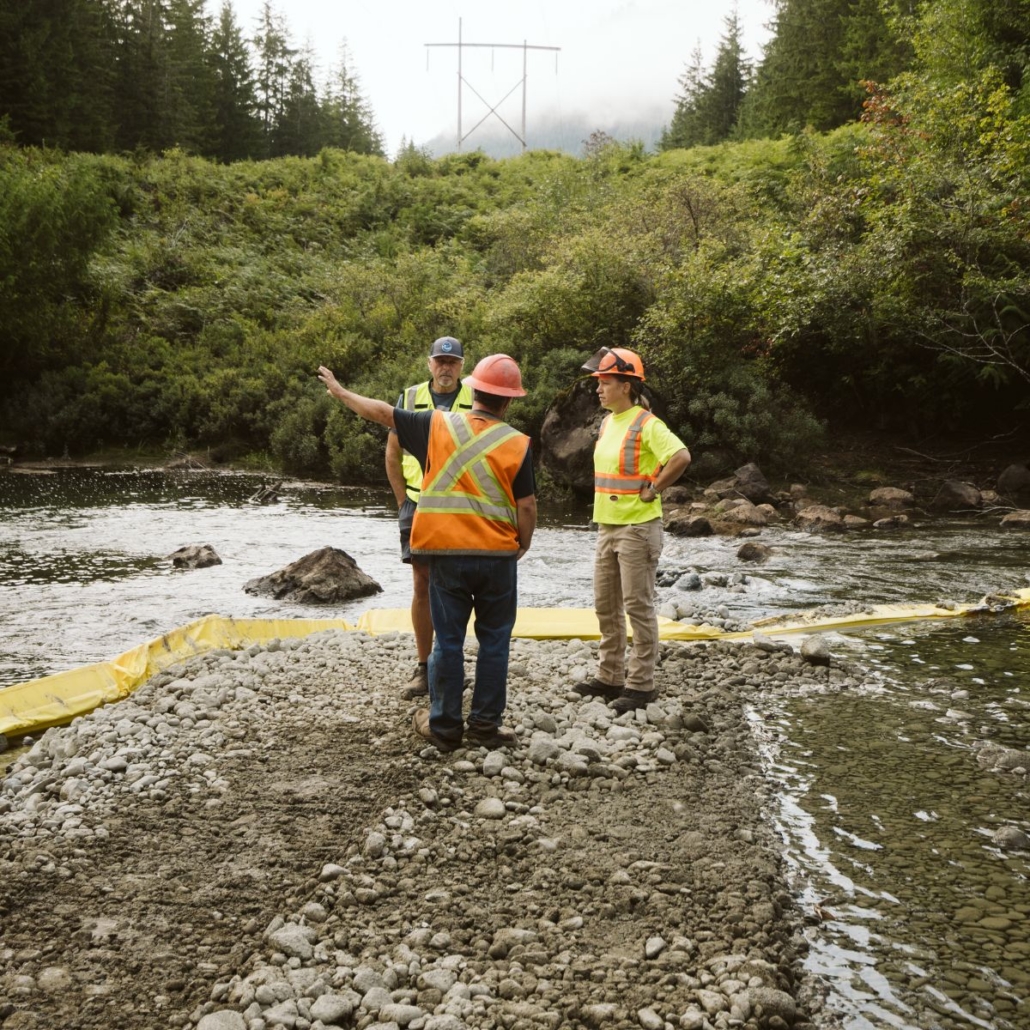
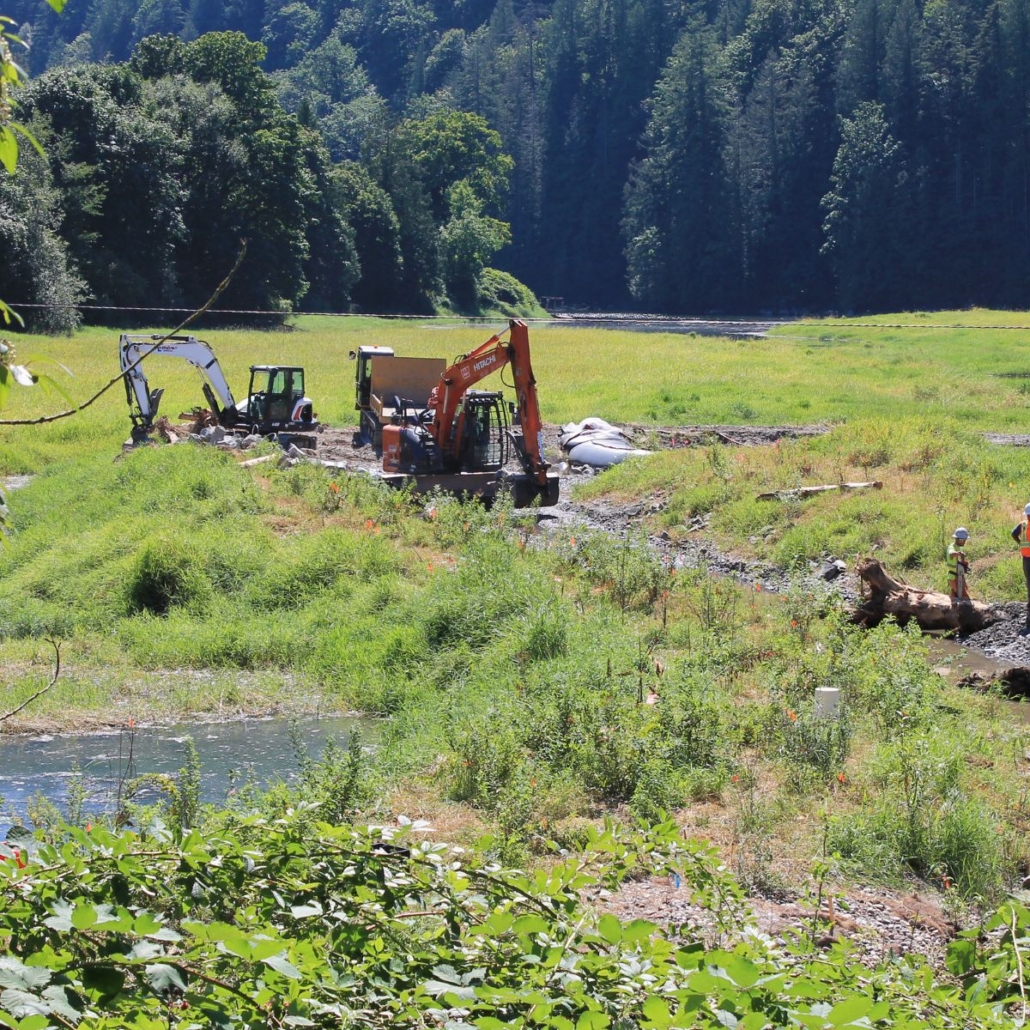
At Maria Slough near Agassiz, Sq’éwqel (Seabird Island Band) was unable to harvest Chinook for years. In 2025, a $112,384 Community Salmon Program grant helped the community restore flows disrupted by drought and aging infrastructure: installing seven rock weirs and 12 large woody debris structures, clearing invasive reed canary grass across 845 square metres, and planting 680 native plants.
More than 500 salmon were sighted using the new habitat during the following spawning season. This is where PSF wades in, by accelerating community-led work with the highest impact on salmon recovery.
Learn more about PSF’s community salmon program.
Special thanks to AltaGas, Enbridge, Mosaic Forest Management, Swiss Water Decaffeinated Coffee Inc., Trans Mountain, The Wolrige Foundation, and Yun Wright in memory of Bob Wright. The Province of B.C. also supports the Community Salmon Program.
$7.39 from every Salmon Conservation Stamp is invested directly in community stewardship, supporting locally led recovery across B.C. and the Yukon.
PSF continues to evolve the Community Salmon Program toward strategic, innovative projects that deliver lasting results for salmon and the communities that depend on them.
STATE OF SALMON
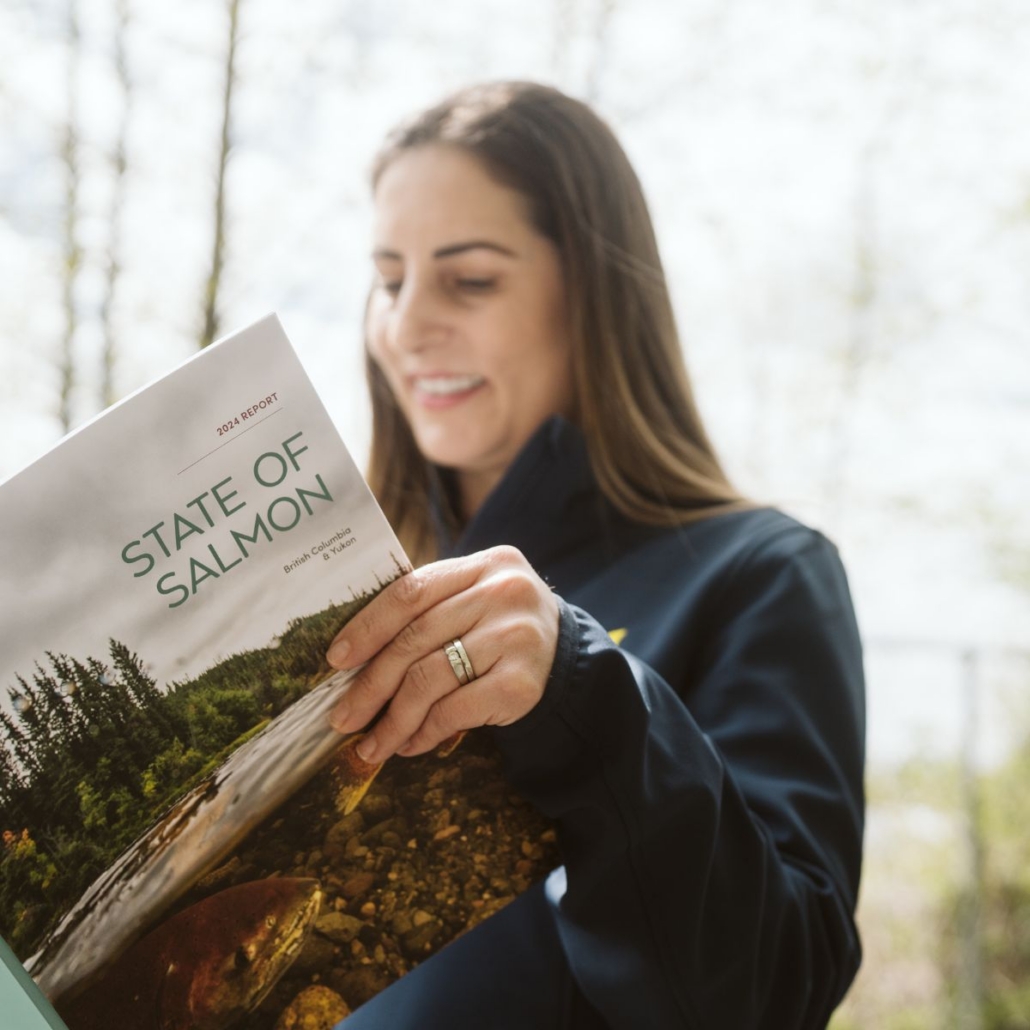
Building off the inaugural State of Salmon report in 2024, PSF released its second version in 2025, finding that two-thirds of Pacific salmon populations in British Columbia and the Yukon are below their long-term average abundances.
The State of Salmon report is the go-to source for high-level information on how all species of Pacific salmon and steelhead are doing in B.C. and the Yukon. The data-driven overview guides PSF’s work, both on the ground and behind the scenes, to strengthen resilience and advance recovery of salmon populations for generations to come.
Learn more: stateofsalmon.ca
Special thanks to the Province of B.C. and Sitka Foundation for supporting the State of Salmon 2025 Report.
Photo: Eiko Jones
More than 200 salmon leaders attended PSF’s State of Salmon webinar. Presentations were delivered to key stakeholders, including decision-makers and the recreational fishing sector. The report is considered the go-to source for news outlets — ranging from CBC to the Times Colonist— helping the general public understand the urgent state of Pacific salmon.
PSF will update the State of Salmon annually with the best available data. Future editions will report on the factors impacting salmon abundance and the path forward to support salmon recovery.
PSF’s progress in science, action, and influence is only possible thanks to you — our partners, donors, and supporters who have championed our mission for decades.
Special thanks to:
Each individual who donated in support of PSF’s work
1,063 new donors, including individuals, companies, and foundations
Hundreds of sponsors and supporters who raised funds at PSF events
Hundreds of individuals who celebrated Wild Salmon Day
Province of British Columbia
Fisheries and Oceans Canada
Pacific Salmon Endowment Fund Society
Learn more about ways to support PSF’s work to drive salmon recovery.

Duncan Kirkpatrick
Based in Victoria, Duncan Kirkpatrick has donated monthly to PSF since 2015. Originally from the Prairies, he has been salmon fishing for more than four decades and has shared his passion for fishing with his family and peers.
“In my view, the Pacific Salmon Foundation is the lead agency when it comes to salmon sustainability.”
“My four- and six-year-old grandsons have had the chance to experience salmon fishing over the past two years. When they ask, ‘Papa, can we go fishing again this summer?’ I hope I can keep saying yes for years to come.”
Geoff and Susan Burns
Geoff and Susan Burns first connected with PSF at the 2014 Vancouver Gala. Nearly a decade later, they deepened their commitment through a multi-year pledge. Geoff, who spent his career in the Canadian mining industry, went on an annual salmon fishing trip to Haida Gwaii with friends for 15 years. Over time, he witnessed declining salmon populations firsthand and the related impacts on the ecosystems that depend on them.
“The state of salmon is an incredibly important issue for our province.”
“Susan and I are fortunate to have the opportunity to give back to organizations like PSF that are dedicated to protecting a cornerstone species of British Columbia. PSF’s targeted programs and research advance conservation efforts in ways that go far beyond what government can do alone.”