Building salmon resilience in the Nicola River
Building salmon resilience in the Nicola River
This story originally appeared in the Fall/Winter 2026 edition of Salmon Steward, the Pacific Salmon Foundation’s print magazine.


Salmon in the Nicola River, near Merritt, B.C., are caught in a perfect storm of flood, fire, and drought. Years of compounding habitat pressures came to a head in 2021, when summer wildfires were followed by an atmospheric river which sent floodwaters tearing through the valley, damaging salmon habitat. Some salmon populations in the Nicola are still holding steady or recovering; threatened Chinook are not.
“These Chinook come back during the hottest, driest part of the year. Since the flood, there are very few refuge areas where salmon can hold in cool water. It’s a gauntlet of hot, shallow water,” says Jess Urquhart, Manager of the Nicola Watershed Stewardship and Fisheries Authority department at Scw’exmx Tribal Council.
To drive salmon recovery, a consortium of partners comprising local First Nations (Scw’exmx Tribal Council, Nooaitch Indian Band, Lower Nicola Indian Band, and Cook’s Ferry Indian Band), the Pacific Salmon Foundation (PSF), the Province of B.C., and Fisheries and Oceans Canada is installing engineered log jams (ELJs) in the Nicola, a first for the Interior.
“The salmon here were already in trouble before the massive flood and fires came through. It brought the Nicola up to the forefront as an urgent priority,” says Jane Pendray, Manager of PSF’s Salmon Recovery and Resilience team.
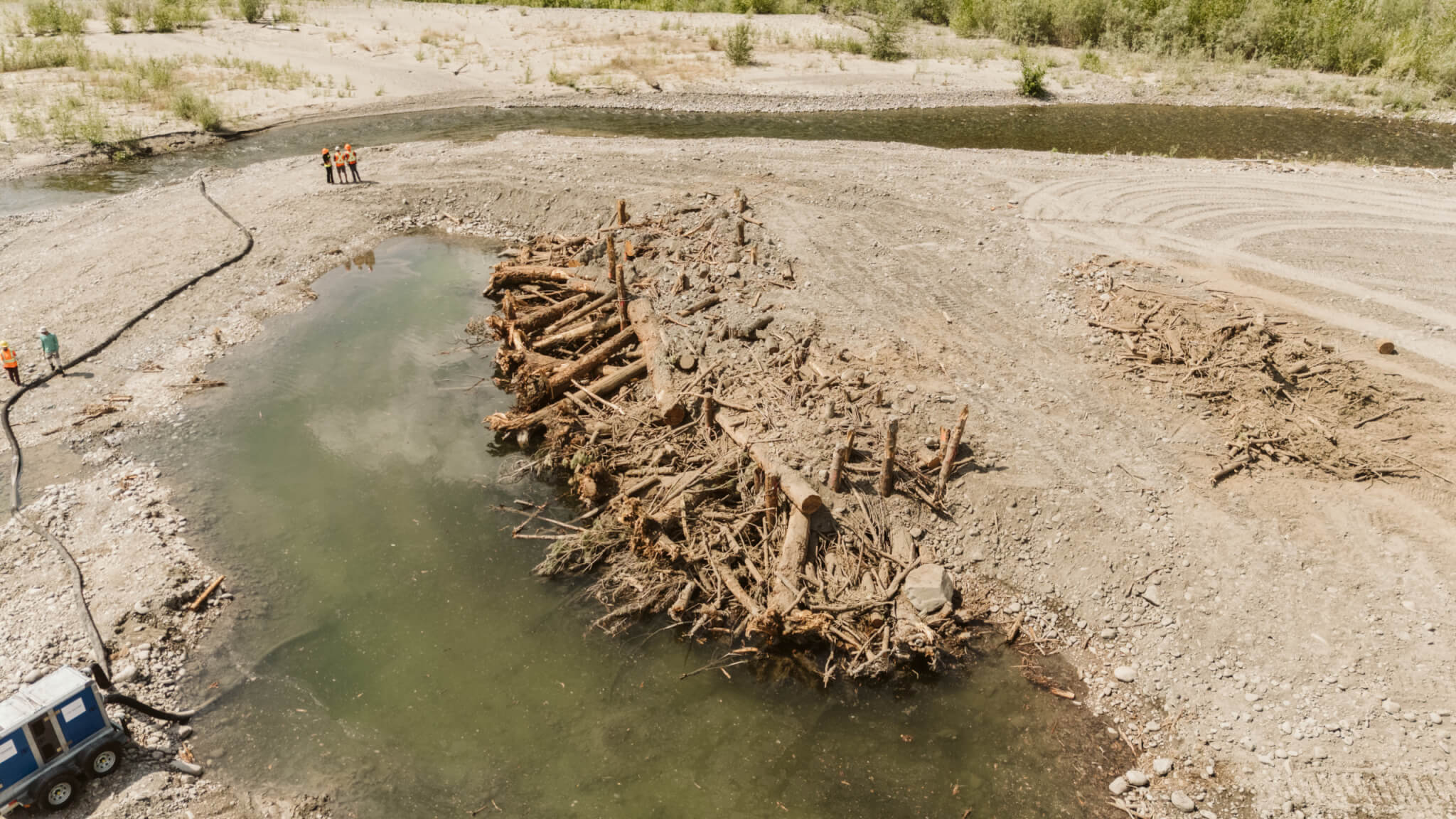
A completed ELJ. Photo: Brandon Deepwell
Engineered log jams (ELJs) are human-made structures of logs, boulders, and root wads that mimic the natural wood clusters in a healthy river. As water moves through and around them, it scours out deep pools and slows the current, creating vital refuges for salmon.
Though coho and steelhead will also benefit, a unique Chinook salmon population is at the heart of this project. These spring-type Chinook are known for spending a year or more in freshwater habitats as juveniles and are listed as Endangered by the Committee on the Status of Endangered Wildlife in Canada.
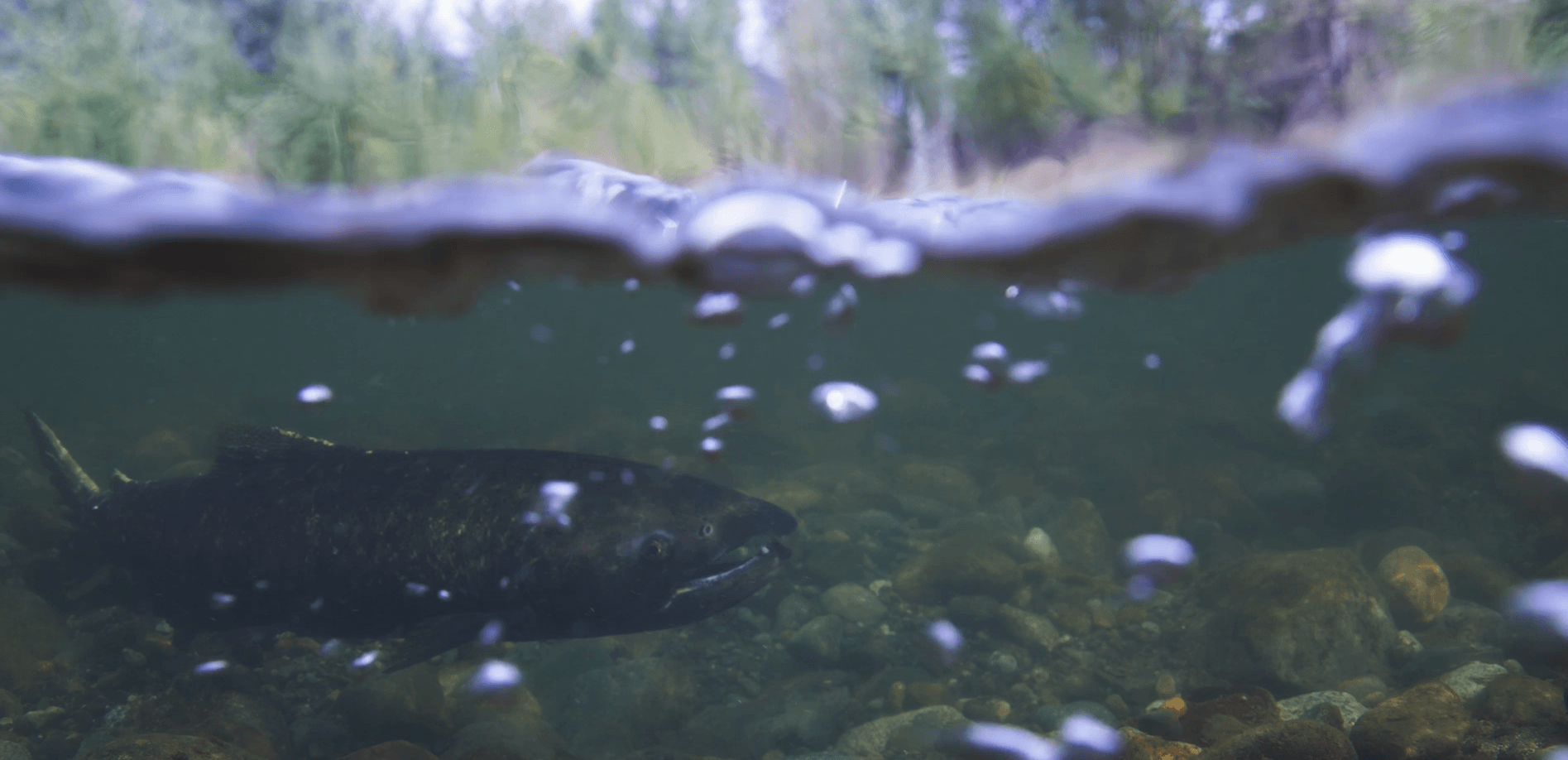
“The flood moved a lot of sediment and gravel around, widening the channel and filling in the pools that juvenile Chinook rely on to rear, forage, and avoid predators. These ELJ structures aim to replicate what nature would have done over time,” says Pendray.
PSF has contributed $600,000 toward this $1.65-million initiative, part of a broader Indigenous-led recovery plan for the Nicola that includes stabilizing the riverbanks, reforestation, and drought management strategies. Two log jams were installed on Nooaitch Indian Band lands northwest of Merritt in July 2026. A third is slated for the winter, along with a monitoring program to track results.
Climate change in the Nicola region was on full display this summer. The Ainslie Creek wildfire twice triggered evacuation orders for residents near the worksite.
Raging for much of the summer, the fire burned 69,705 hectares. By diversifying flows, reconnecting the river to its floodplains, and helping riparian vegetation regrow, the ELJs are expected to buffer the river against both drought and flooding, and could improve wildfire resilience.
“The Nicola River is special because it’s home. It’s in our backyards,” adds Urquhart. “These salmon have been on a long journey. For me, success will mean seeing coho and Chinook using these log jams on their way home.”
Urquhart’s wish came true weeks after the ELJs were installed: many returning Chinook were seen already using the new habitat features, with more fish expected to return later in the fall.
 Century-old Comox farm sees salmon restoration