A roadmap to recovery for Upper Fraser Chinook
Oct 28, 2026|inBlog, Climate Adaptation Series, Salmon Steward


This story originally appeared in the Fall 2026 edition of Salmon Steward, the Pacific Salmon Foundation’s print magazine.
After an intense ocean journey, some returning Chinook salmon arrive at the mouth of the Fraser River near Vancouver with another 1,000 kilometres of migration still ahead of them before they reach their spawning grounds past Prince George.
Upper Fraser Chinook salmon are integral to B.C.’s cultures and ecosystems. Yet they’ve faced recent declines, and are well below their long-term average abundances, raising concerns for First Nations, communities, and researchers.
The Upper Fraser Fisheries Conservation Alliance (UFFCA) and Pacific Salmon Foundation (PSF) are tackling this issue through a solutions-oriented approach.
Since 2023, UFFCA and PSF have brought together Indigenous Knowledge, local experience, and science to assess these fish.
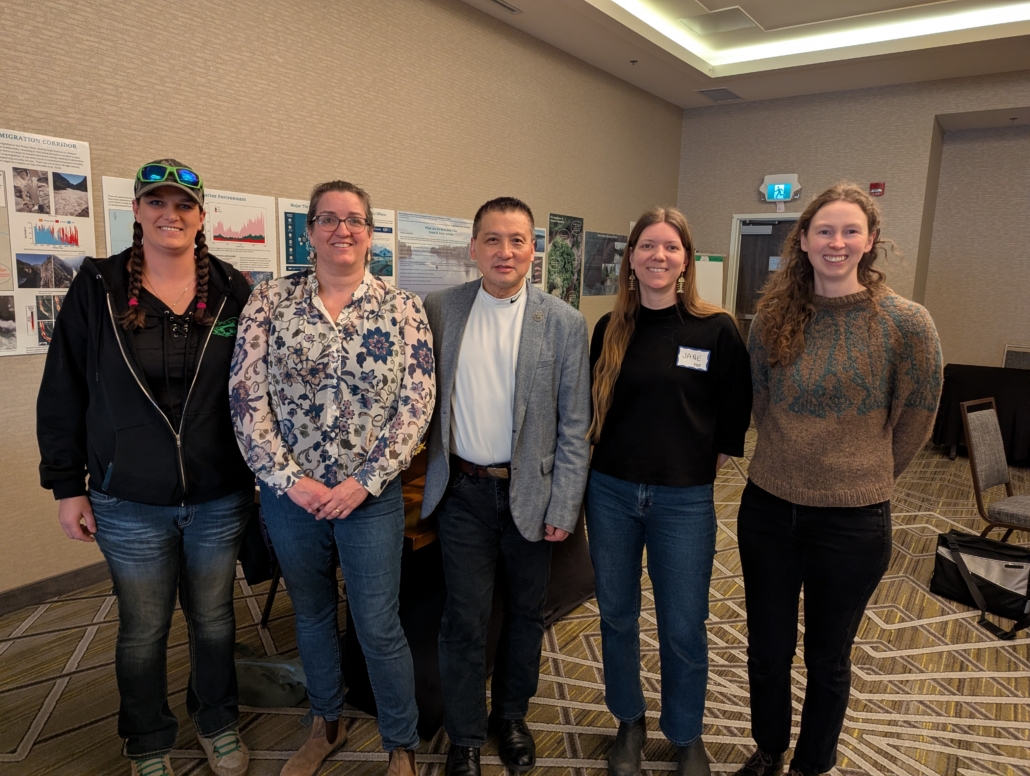
PSF’s Recovery and Resilience team meet with partners in Prince George, B.C.
The outcome is a new recovery plan, published in 2026, which summarizes the status of two major Upper Fraser Chinook populations, ranks their most pervasive threats, and highlights targeted actions to recover them.
“Upper Fraser Spring Chinook are an iconic population of Pacific salmon that need our help after experiencing long-term declines,” says Gordon Sterritt, Executive Director of UFFCA. “This recovery plan is just the first step to bringing back these at-risk fish.”
The report also shines light on recent increases in spawning abundance. Both populations have shown steady increases in abundance since 2019, culminating in a return of more than 20,000 Chinook in 2025, the largest return since 2014. This shows the resilience of these populations, indicating that habitat restoration efforts and decreased fishing pressures may be showing results.
However, recovery remains far from guaranteed.
Marine competition
The report found that the highest-ranked threat to Upper Fraser Chinook is increased competition from industrial-scale hatchery pink and chum salmon released by Alaska, Russia, and Japan. These hatchery fish overlap and compete with Upper Fraser Chinook in the North Pacific Ocean.
Other major threats include freshwater drought conditions, such as changes in water levels and temperatures, pathogens and disease, predation, and fishing.
“Upper Fraser Chinook salmon face numerous threats across their complex life cycle,” says Eric Hertz, Pacific Salmon Foundation. “Recovery is possible, however, and we now have a pragmatic pathway to start taking action.”
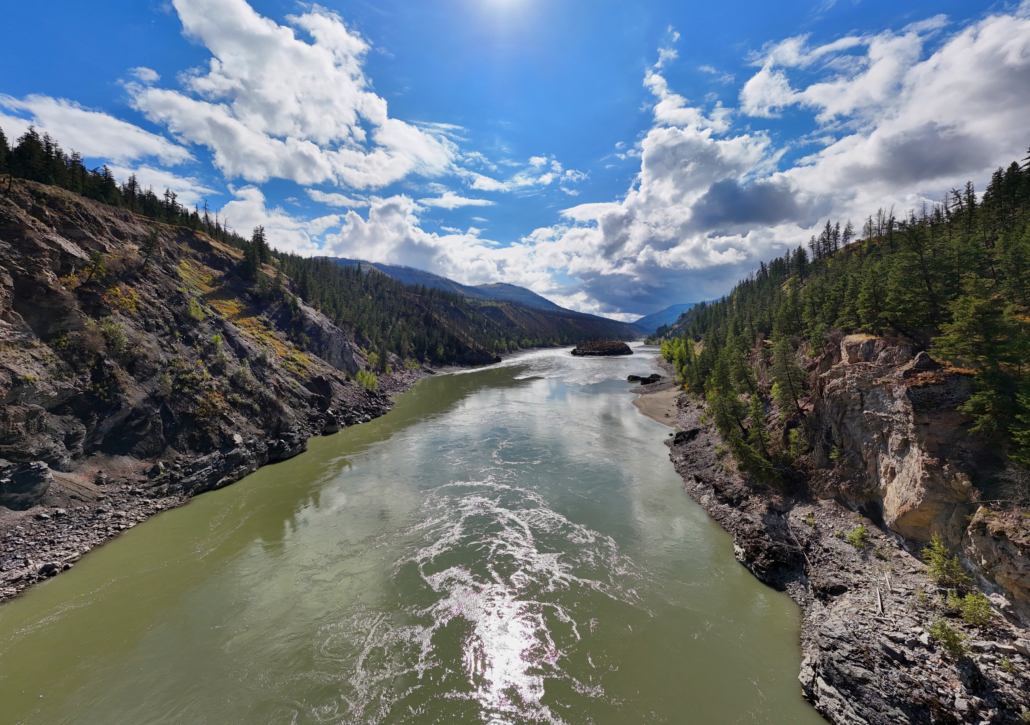
The Upper Fraser River near Big Bar.
Recommendations for recovery
Ironically, one of Upper Fraser Chinook’s biggest threats – hatchery fish – may also be one of the answers to boosting recovery, if done correctly.
In August, DFO announced more than $38 million in funding for a new Upper Fraser River Salmon Conservation Hatchery in Prince George in collaboration with the Lheidli T’enneh First Nation. This aligns with the report’s recommendations to expand hatchery supplementation of Upper Fraser Chinook to help boost abundance.
Other top priorities include removing open-net pen salmon farms along migration routes, addressing mass-scale production of international hatchery salmon, improving freshwater conditions, and increasing research efforts to further improve understanding of these fish populations.
This report is just one of several salmon recovery plans in development in B.C. – something PSF is prioritizing through a new Recovery & Resilience team.
Targeted and localized plans aim to give at-risk salmon populations like Upper Fraser Chinook the best chance at recovering and persisting for future generations.
 Ashes in the current: hope and recovery in B.C.’s most famous salmon rive...