Photos: Peter Mather, Elizabeth MacDonald, Council of Yukon First Nations
The Yukon River is home to some of the world’s longest-migrating salmon, travelling more than 3,000 kilometres through the Bering Sea and Alaska to reach their spawning grounds. But the Chinook, chum and coho that undertake this journey have faced steep declines in recent years — resulting in fisheries closures and deep consequences for the communities that rely on salmon for food, culture, and identity.
“It’s heartbreaking to have to ask people not to fish,” says Elizabeth MacDonald, Manager of Fisheries, Council of Yukon First Nations.
“Salmon were the cornerstone of summer. Now, the fish camps where people used to gather in are quiet, and smoke shacks are falling in from disuse. Grandparents worry they won’t have the chance to pass on their knowledge. The situation is dire enough that every fish counts.”
New data and status assessments from the Pacific Salmon Foundation (PSF) now sharpen our understanding of how Yukon River salmon are doing, and where they are most at risk. Of the 20 unique groups of salmon – known as Conservation Units (CUs) – 16 are struggling and four are data deficient.
Two thirds of the Chinook CUs (eight of 12) and every chum CU with enough data for assessment (five of seven) are in the red (‘poor’) status zone, with some facing a high threat of extinction. Although three Chinook CUs are classed as amber (‘fair’), they too have seen sharp declines over the past decade and are of conservation concern. There is little information on the sole coho CU, which migrate up the Porcupine River in late fall, often under ice, though recent counts in Alaska have been some of the lowest on record.
Key factors behind the Yukon salmon declines
Yukon salmon declines have been linked to a mix of interconnected factors. In the Bering Sea where young fish rear, climate change is transforming habitats and affecting food availability.
In the Yukon River and its tributaries, unseasonably warm waters are stressing adults on their journey home, increasing their vulnerability to ongoing threats like disease and driving the die-offs seen in recent years.
The region is warming three times faster than the global average – melting permafrost, reshaping rivers, and transforming the locations and quality of salmon habitat. In October 2025, Big Lake in Alaska gave way without warning, eroding and draining into Koyukuk River, a major Yukon River tributary. Thaw slumps like this are believed to be affecting salmon habitat across the watershed.
These shifts are compounded by long-term fishing impacts that reduced genetic diversity, contributing to size declines and leaving Yukon salmon with younger spawners, fewer females, and fewer eggs per generation.
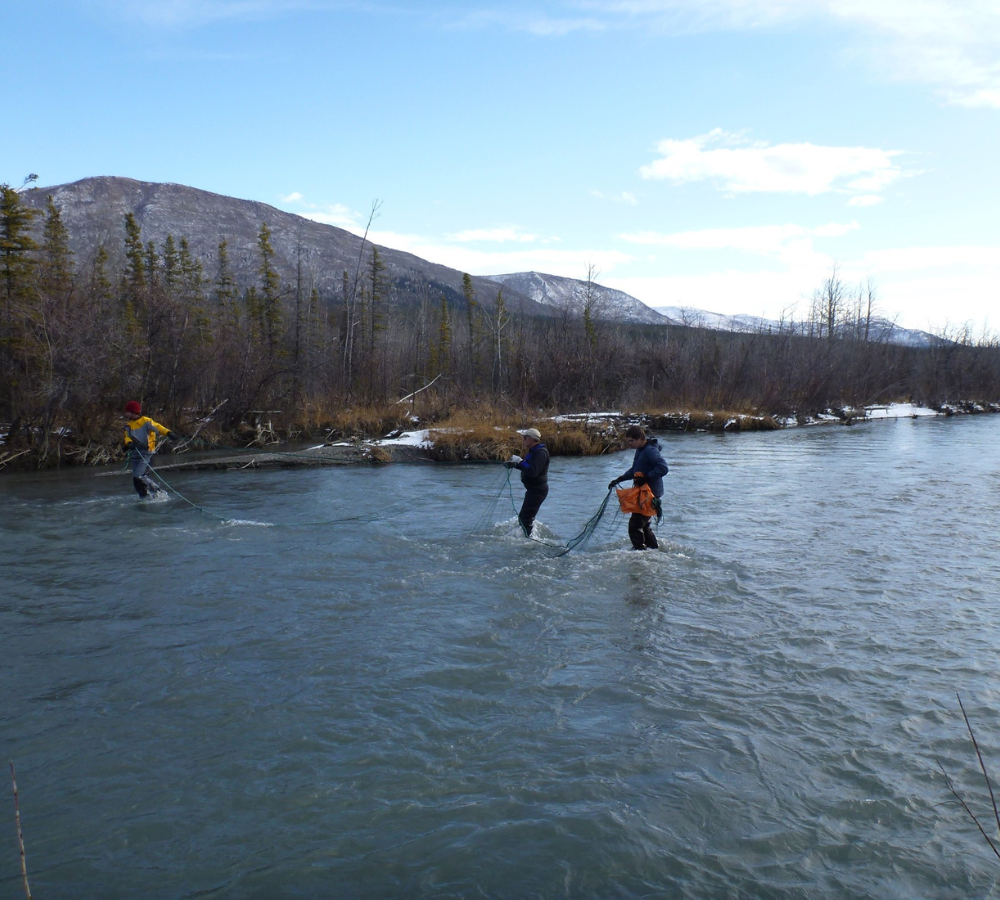
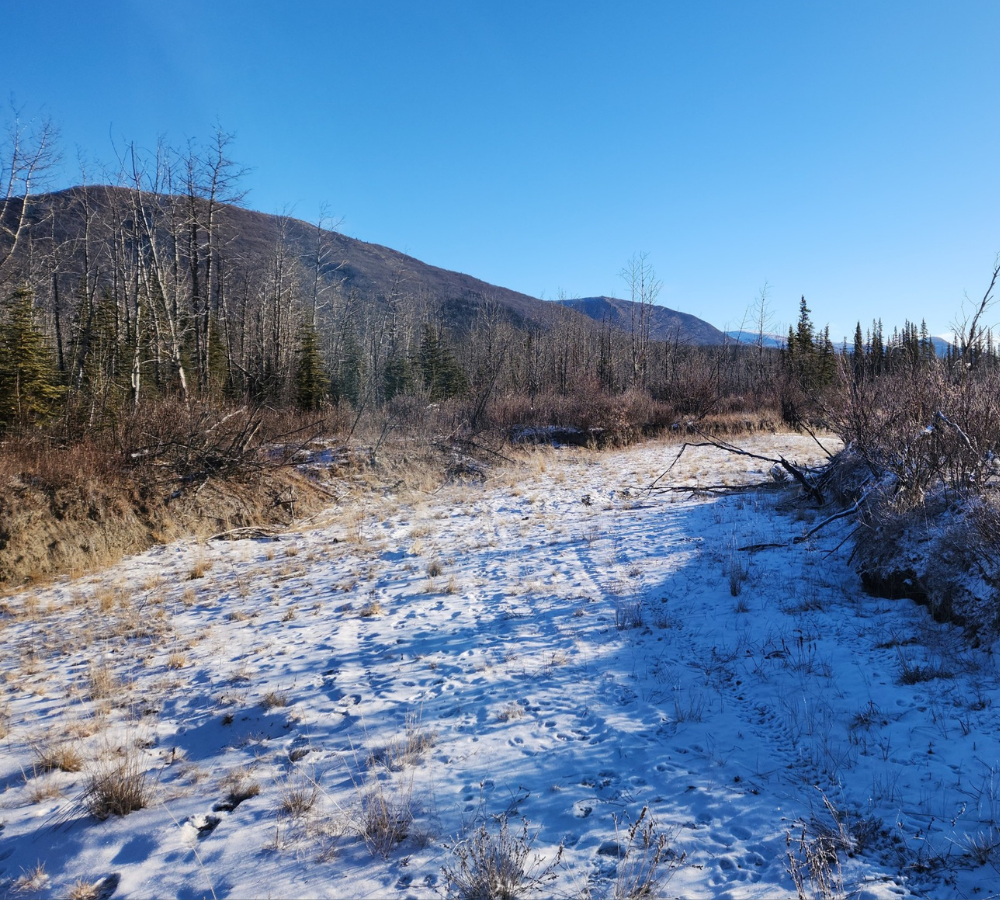
These photos show the lack of water above chum spawning habitat in the Kluane River after the Kaskawulsh Glacier retreated so much that its meltwater abruptly switched direction.
In addition to population status assessments, PSF also evaluated the impact of seven land-based pressures affecting freshwater habitats, including fire, roads, and mining. Although cumulative pressures are relatively lower than in southern B.C., they can further strain already vulnerable populations.
Notably, mining activity is concentrated in the northwest near Dawson City, where historic Gold Rush dredging has dramatically altered stream channels and riparian habitats. Hard rock mining can also harm salmon by releasing contaminants, as seen with the Eagle Gold Mine failure that released cyanide and other chemicals into local waterways in 2024.
Although mining affects only a fraction of the Yukon’s vast landscape, it overlaps with critical habitat for specific CUs. PSF found that more than 40 per cent of the spawning grounds for North Yukon and Stewart chum, and about a third for Northern Yukon Chinook, are ‘highly threatened’ by mining, which could affect these salmon’s ability to reproduce.
Pathways to recovering Yukon salmon
Ongoing salmon declines — first Chinook, and more recently chum — have prompted unprecedented recovery efforts. Current measures include a seven-year moratorium on Chinook harvests in the mainstem Yukon and Canadian tributaries, along with closures of several chum fisheries.
“When salmon are gone, the land is hungry. Bears, wolves, and birds are hungry. Entire ecosystems start to change because those nutrients don’t come from anywhere else,” says MacDonald.
“To bring salmon back, we’re dependent on each other across the border and everyone needs to work together. The fish that still make it home now carry strong genes and are adapting to new conditions. If we give them time, they can rebuild.”
Chinook rebuilding plans are being developed on two fronts in consultation with several partners: a domestic plan led by Fisheries and Oceans Canada (DFO), and an international plan through the Yukon River Panel. Assessments are also underway to update management measures for chum.

Data on the numbers of Chinook and chum salmon migrating into Canada are relatively robust, and the declines have spurred increased efforts to track how many return across the Yukon. However, monitoring in this vast, harsh landscape can be exceptionally challenging and costly, with many sites only reachable by helicopter. Upstream counts – especially for chum – have been patchy through time and are not always compiled in a user-friendly format, which can complicate recovery planning.
The Yukon River is now the final Pacific salmon-bearing region in Canada to be added to PSF’s Pacific Salmon Explorer, marking a milestone in a decade-long effort to help address these challenges by bringing salmon and habitat data together into one accessible platform. With Yukon salmon in crisis, this information is intended to facilitate local knowledge-sharing and coordination toward long-term, watershed-wide solutions.
“The Pacific Salmon Explorer strengthens the collaborative work of DFO, Yukon First Nations, and all partners involved in the Yukon River Chinook Rebuilding Plan,” says Dennis Zimmermann, Chair of the Yukon Salmon Sub-Committee.
“With shared information, we can align our actions, build trust, and focus on long-term solutions. This cooperation — and the hope it carries — is essential to rebuilding Yukon salmon for future generations.”
