
Photos: Lars Reese-Hansen, Secwépemc Fisheries Commission
Fall rains have been replenishing streams and rivers across B.C., offering a welcome break for migrating salmon and the stewards tracking their return.
Through the summer and fall, extreme drought caused record low flows and high water temperatures in several watersheds, threatening salmon survival. Emergency fish rescue efforts unfolded this year in Port Coquitlam, Boundary Bay, Campbell River, and other areas faced risks of strandings and die-offs.
To enable faster, salmon-smart responses, the Pacific Salmon Foundation (PSF) and the Province of B.C. are piloting a rapid drought assessment protocol.
Currently, hydrometric stations across B.C. offer detailed data on stream flow, temperature, and water quality – but their high cost limits coverage, leaving many small but ecologically important salmon streams unmonitored or dependent on ad-hoc observations from local stewards. This pilot protocol provides a practical, scalable way to track stream conditions and trigger coordinated drought responses when salmon are put at risk.
“First Nations communities, streamkeepers, and conservation groups already gather valuable data and have real-time insights into local conditions,” says Mark Phillpotts, Aquatic Habitat Recovery Unit Head, Province of B.C.
“As drought impacts grow — including for salmon — this tool would allow local partners to contribute information in a unified way that strengthens how we understand and respond to drought across the province.”
A new cheat sheet for drought reporting
The system helps local stewards to quickly classify streams as ‘red,’ ‘yellow,’ or ‘green’ concern using a standardized scorecard built around key visual checks of flow and habitat conditions.
A ‘green’ stream has connected pools, riffles, and sometimes floodplains, supporting sediment and nutrient exchange and giving salmon access to varied, healthy habitat. In turn, a ‘red’ stream has limited or no flows, cutting off habitat and increasing the risk of strandings and die-offs for salmon. When a stream shifts into the ‘red’ zone, partners can alert each other immediately and take targeted action.
“Like disaster response or first aid, the idea is to have an efficient triage system that directs effort where it’s needed most for the benefit of salmon and the broader watershed,” says Marc Porter, Senior Analyst, Pacific Salmon Foundation.
Actions like removing excess gravel, placing sandbags to raise water levels, oxygenating stagnant channels, and adding shade are among the emergency interventions that can make a meaningful difference for salmon.
Early trial runs in B.C.
In the summer of 2025, limited pilots on east Vancouver Island and in the southern Interior tested the model using creek walks and trail cameras.
For instance, the Secwépemc Fisheries Commission worked with Yucwmenulúcwu (caretakers of the land) staff at the Splatsin Development Corporation to assess low-flow migration barriers along the lower Salmon River, which outflows into Shuwap Lake near Salmon Arm.
Once home to abundant sockeye, coho, and Chinook, this watershed has seen steep declines over decades, with the Committee on the Status of Endangered Wildlife in Canada (COSEWIC) listing Interior Fraser coho as Threatened in 2016 and Lower Thompson spring Chinook as Endangered in 2020.
The Salmon River has been prone to extreme drought conditions, threatening the survival of both adult salmon and stream-type juveniles that spend more than a year in freshwater. This summer, the crew installed trail cameras at five key sites selected for their sensitivity to low flows and their importance for understanding connectivity and groundwater influence.
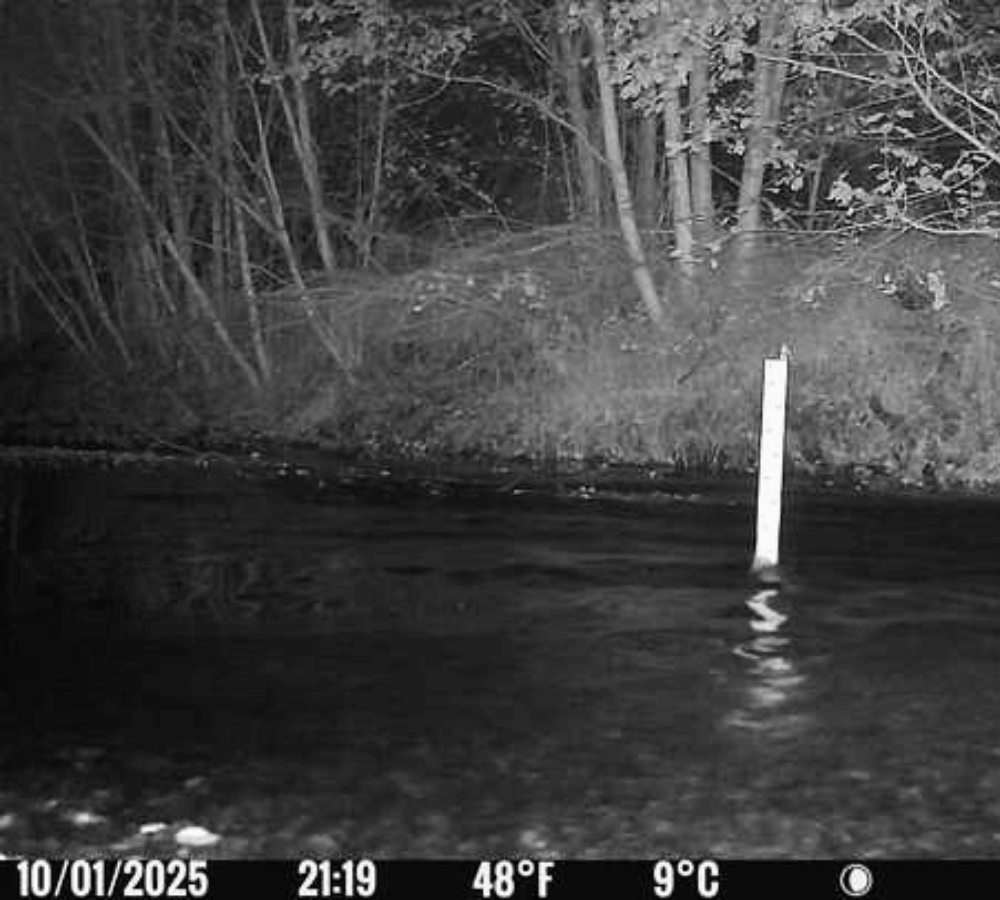

“Trail cameras on the Swawll Setatkwa (Salmon River) enabled us to watch the changing habitat conditions for our salmon relations, respond quickly to potential barriers to fish passage resulting from drought, and inform long-term planning and stewardship actions. This program has created affordable access for our community to witness and further understand what’s happening in water bodies that are not typically monitored,” says Robyn Laubman, Territorial Water Manager at Splatsin.
At roughly $200 each – a fraction of traditional stream flow monitoring methods – the cameras captured daily photos through the season. The next step is to apply the full protocol to analyze the images and help guide drought responses in 2026.
Proactive drought management
In the short term, this kind of data not only informs emergency operations but also guides water use restrictions, fishing closures, and other management measures. Eventually, it can help build a clearer picture of which systems are most vulnerable to drought and where to focus recovery efforts.
“Standardized information allows us to track changes over time, identify meaningful patterns, and make informed decisions — whether for immediate drought response or long-term management solutions,” says Phillpotts.
“As climate changes, having reliable data is key for guiding watershed recovery efforts that centre resilience.”
By equipping communities with practical, science-based tools, and making localized drought data accessible, the protocol could help advance systemic change in how salmon-bearing watersheds are managed across B.C.
This project is supported by the British Columbia Salmon Restoration and Innovation Fund — a joint program from the Government of Canada and Province of British Columbia (BCSRIF). Thanks as well to Fisheries and Oceans Canada (DFO) for supporting the eastern Vancouver Island pilot project fieldwork.
