Bringing Chinook Back to Maria Slough
This story was first published in PSF’s Fall 2025 Salmon Steward magazine.
For years, Tl’élx̱xel (Chinook) harvests proved impossible for the Sq’éwqel (Seabird Island Band) near Agassiz – until 2024. After sustained restoration efforts, Seabird Island members were able to harvest a small number of Chinook to share with the entire community.
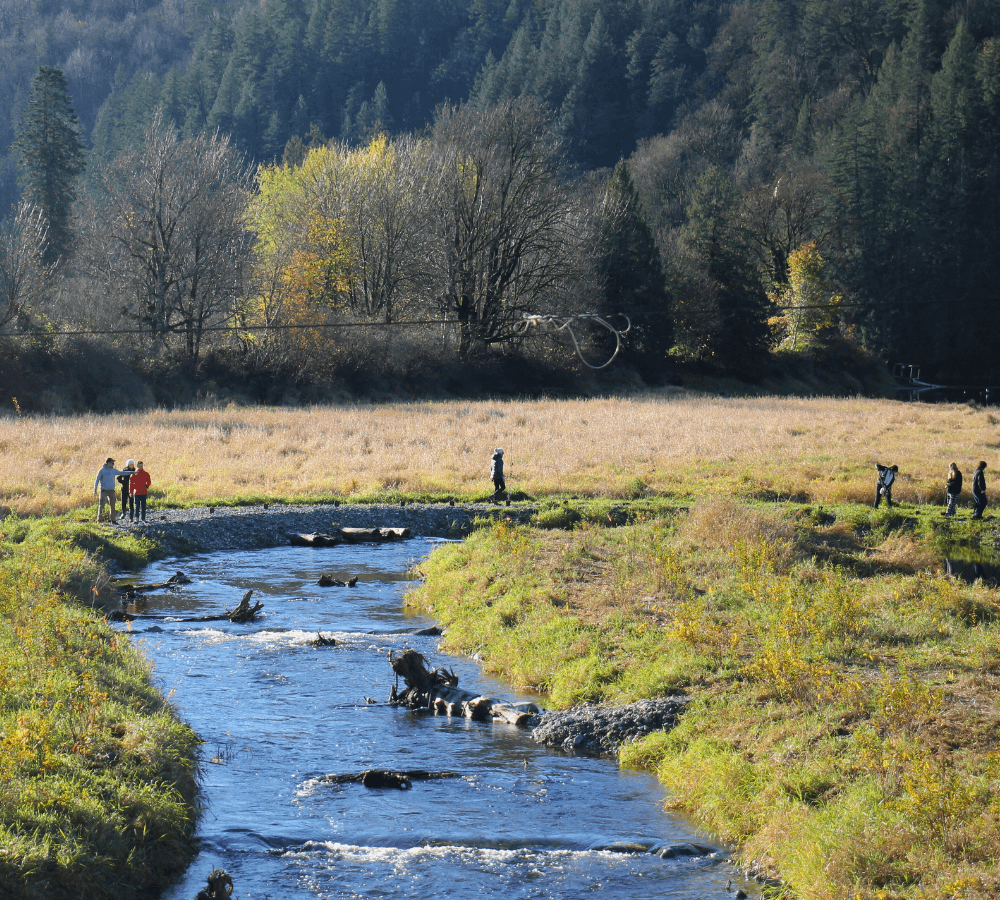
“We had one of the highest Chinook returns in a decade,” says Jillian Stewart, a biologist for the Sq’éwqel. “Most came back to spawn in the channel we’d just restored in Sqémelech (Maria Slough). When you give fish the right conditions, they respond.”
Elders and knowledge holders like Councillor Rodney Peters recall the slough as a once-vibrant side channel of the Fraser River, which supported abundant Chinook, Sthéqi (sockeye), Kwṓx̱weth (coho) Kw’ó:lexw (chum) and Hṓliya (pink). Over time, development and climate change have degraded this critical habitat and cut off freshwater flows.
To help rebuild dwindling stocks, the community has created and maintained spawning channels that doubled salmon habitat. But severe drought conditions in recent years – compounded by water management challenges and failing culverts – have restricted Chinook passage and their ability to spawn. The population has since been designated endangered by the Committee on the Status of Endangered Wildlife in Canada.
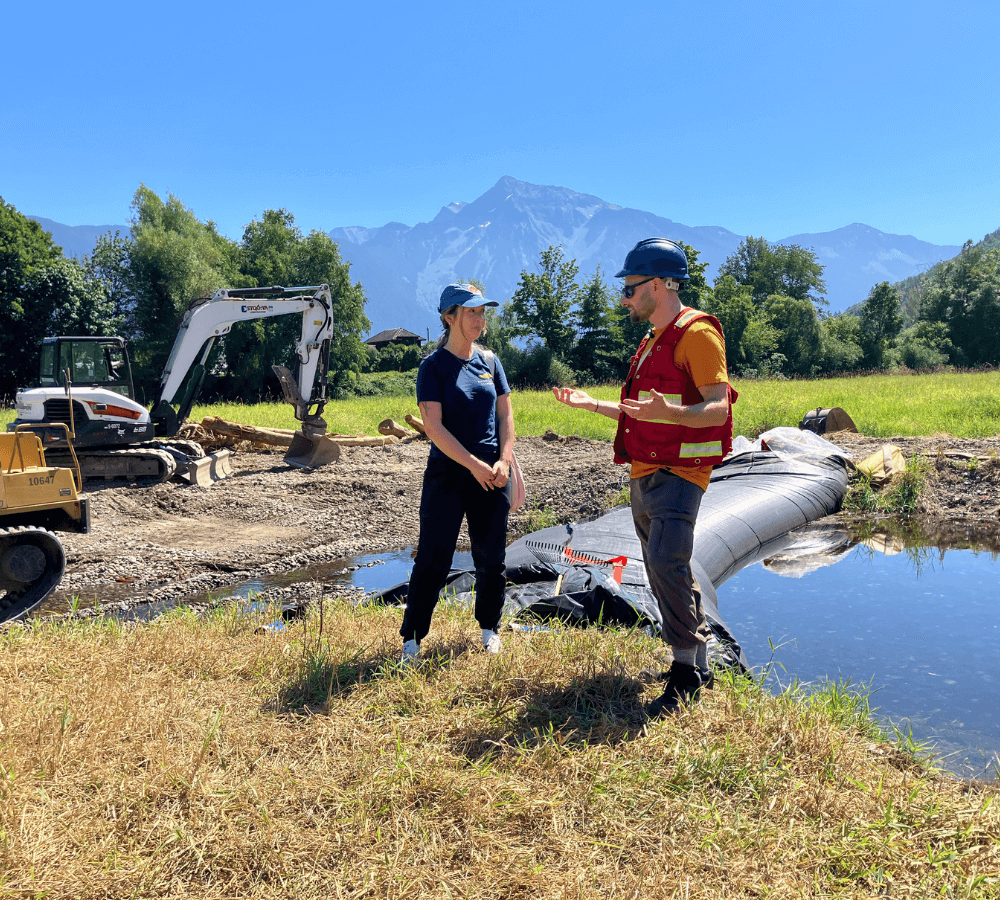
In 2024, Seabird Island collaborated with Fisheries and Oceans Canada (DFO)’s Habitat Restoration Centre of Expertise and other partners to restore these channels and address the dangerously low flows. With support from PSF’s Community Salmon Program in 2025, crews redistributed spawning gravel throughout the channel and added boulders and logs to cool the water, boost oxygen, and keep flows moving through summer heat.
“It’s a stepping stone toward our hope of reconnecting Maria Slough to more freshwater – so it’s not stagnant anymore – and bringing back a lot more salmon,” adds Stewart.
To combat invasive canary reed grass, the restoration team cut and cleared it weekly so native dogwood and willow could take root. The goal of the restoration is to give salmon easier access to high-quality habitat where they can find shelter for years to come.
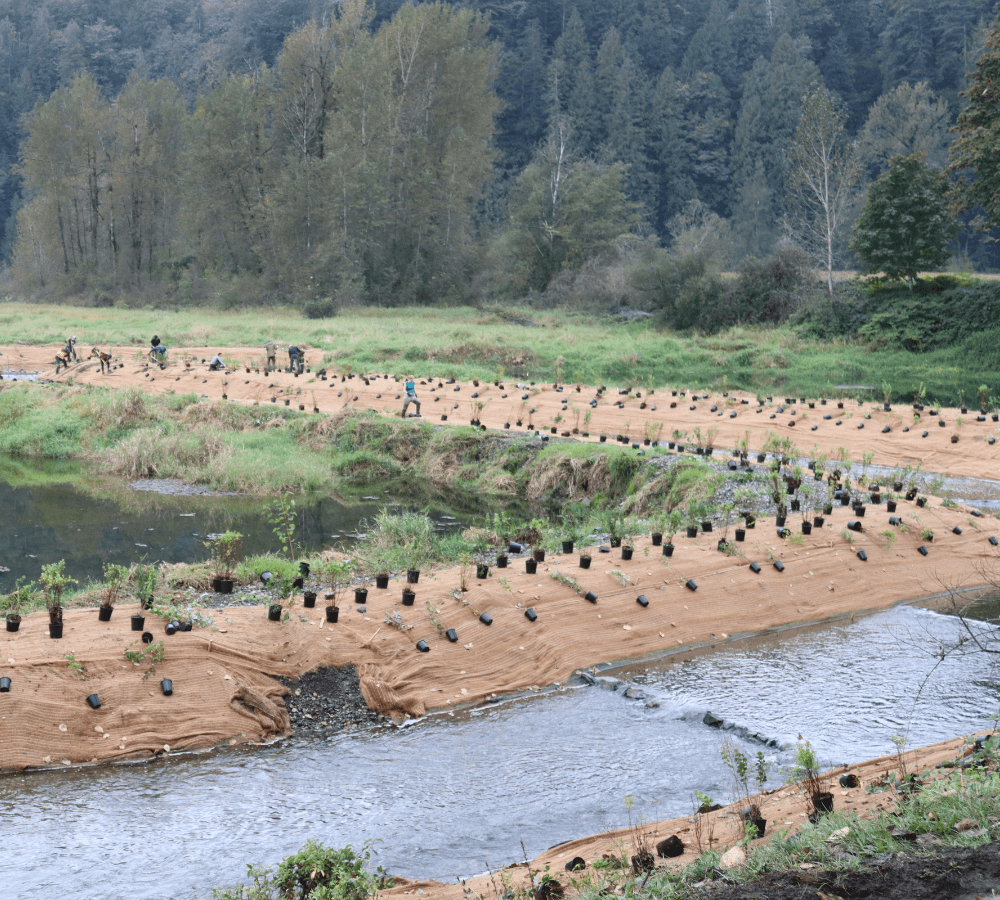
Chinook were traditionally harvested in early spring, providing critical nutrition after long winters. Today, the Sq’éwqel continue to reconnect with salmon and support their recovery through annual reporting sessions, monitoring, planting events, and spring fry releases. These activities create a feedback loop where community members can share their input and see new ideas put into practice – from water quality monitoring to species surveys.
“Our connection to the land, the water, and all living beings is evident in our guiding principles. We have an inherent responsibility to listen to what the salmon are telling us, steward them, and ensure they are there for years to come,” says Sally Hope, Councillor of Seabird Island.
“This project will allow a safe place for salmon to spawn – and hopefully, an opportunity for our grandchildren to harvest.”
PSF’s Community Salmon Program granted $112,384 in support of this project. This program leverages the proceeds of the Salmon Conservation Stamp with generous donor support, providing more than $1.5 million in grants each year to power local restoration efforts. Learn more.
