A Year in Review: Our Shared Wins for Salmon in 2025
Looking back on 2025, the Pacific Salmon Foundation (PSF) celebrates meaningful progress for wild salmon. From promising returns in the Fraser River to game-changing projects and cutting-edge research, these wins offer hope for salmon recovery and resilience.
This past year, PSF worked with partners, communities, and supporters across B.C. and the Yukon. We funded more than 150 community-led projects, advanced research on key threats, and helped create new spawning habitat in vital watersheds. If our work inspires you, please consider donating to PSF today.
Our collective actions matter. Thanks to the generosity of our community, we are helping salmon thrive now and for future generations.
Please join us in reflecting on the momentum we’ve built together in 2025 that will carry into next year and beyond.
Changing the game for Chinook salmon on Vancouver Island
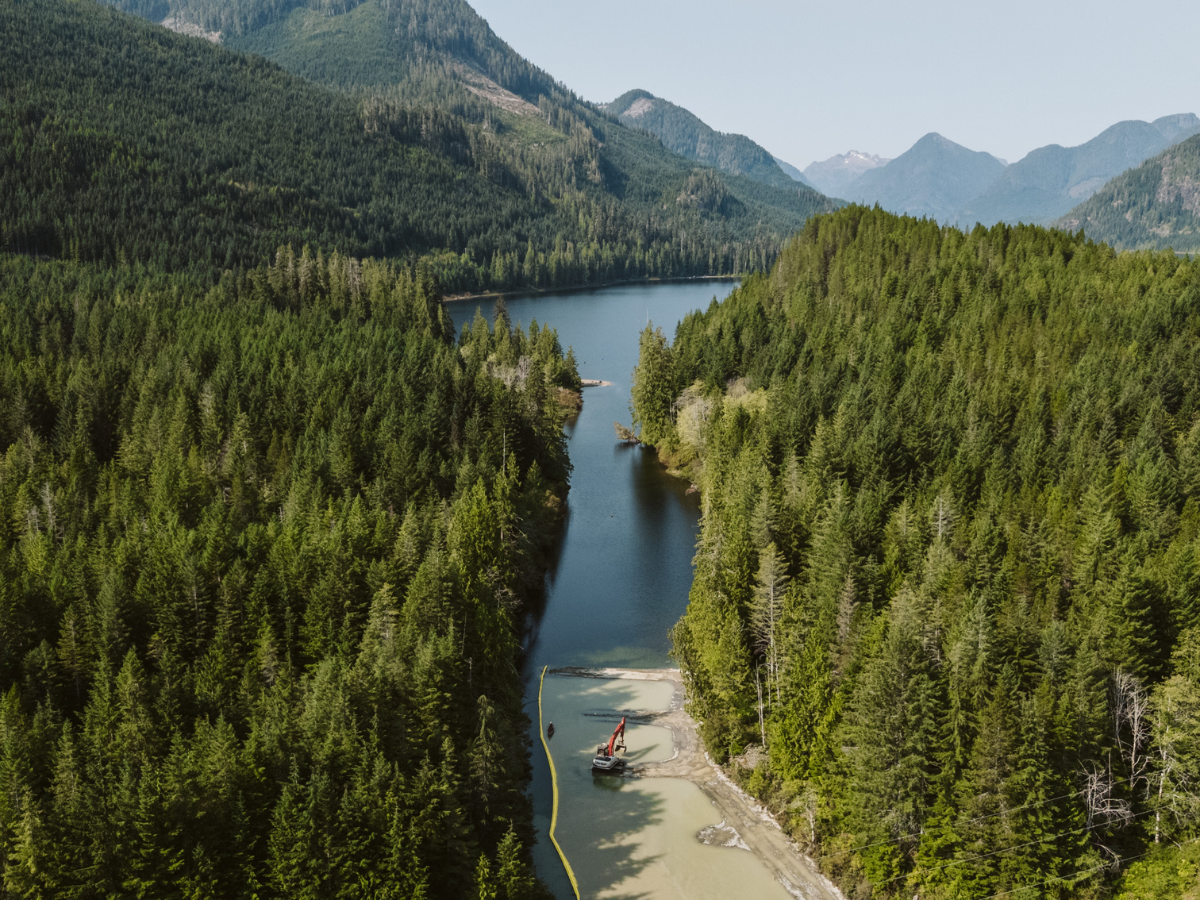
This summer, a dedicated group of partners created 200 metres of high-quality spawning habitat near Muchalat Lake near Gold River on Vancouver Island to benefit a Chinook salmon population that has been designated as threatened by the Committee on the Status of Endangered Wildlife in Canada (COSEWIC). This $1.3 million project – $560,000 of which was contributed by PSF – will increase Chinook spawning capacity at the site for years to come. The results came in quick: only a month after construction finished, hundreds of salmon were already spawning in the new habitat.

Before and after fish farms
This spring, PSF stepped up to monitor wild juvenile salmon in the Discovery Islands, helping ensure that long-standing regional monitoring efforts continue through this critical transition period. Open-net pen Atlantic salmon farms were phased out of the region between 2020 and 2021, and understanding how wild salmon respond to this change depends on consistent data collection. From 2025 to 2028, PSF and partners will sample juvenile salmon for pathogens, assess sea lice levels, and study key environmental factors as the fish migrate past the now-inactive farm sites.
First Nations-led pinniped monitoring
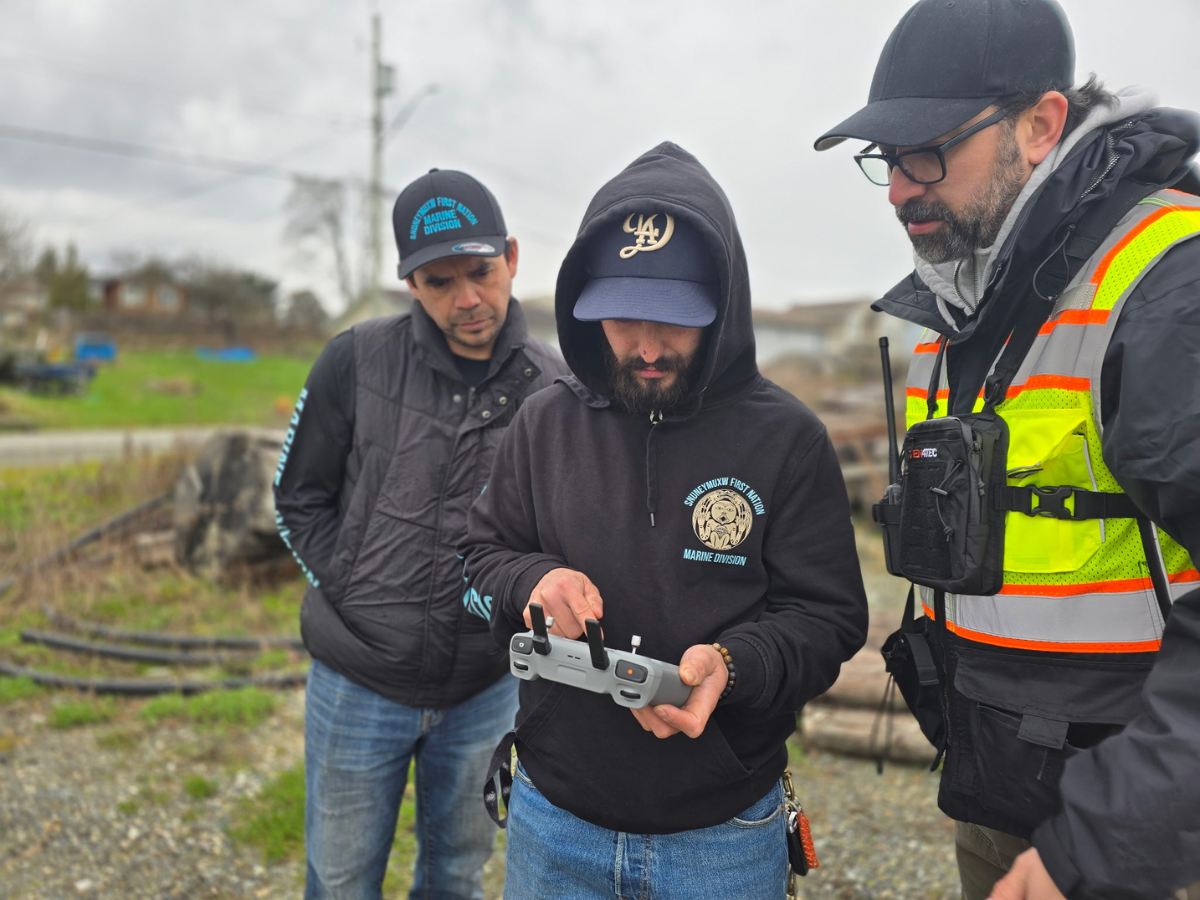
How do seals and sea lions use rivers and estuaries? First Nations partners, PSF, and BC Conservation Foundation are working together to monitor pinniped presence and behaviour, such as salmon predation. The team has conducted consistent monitoring efforts for more than 18 months, including shore-based visual surveys, wildlife cameras, sonar, and drones, to track pinniped movements into freshwater. The goal is to develop a long-term monitoring framework that supports Indigenous-led stewardship and informs evidence-based pinniped management decisions.
The British Columbia Salmon Restoration and Innovation Fund (BCSRIF) – a joint program from the Government of Canada and Province of British Columbia – supports this project.
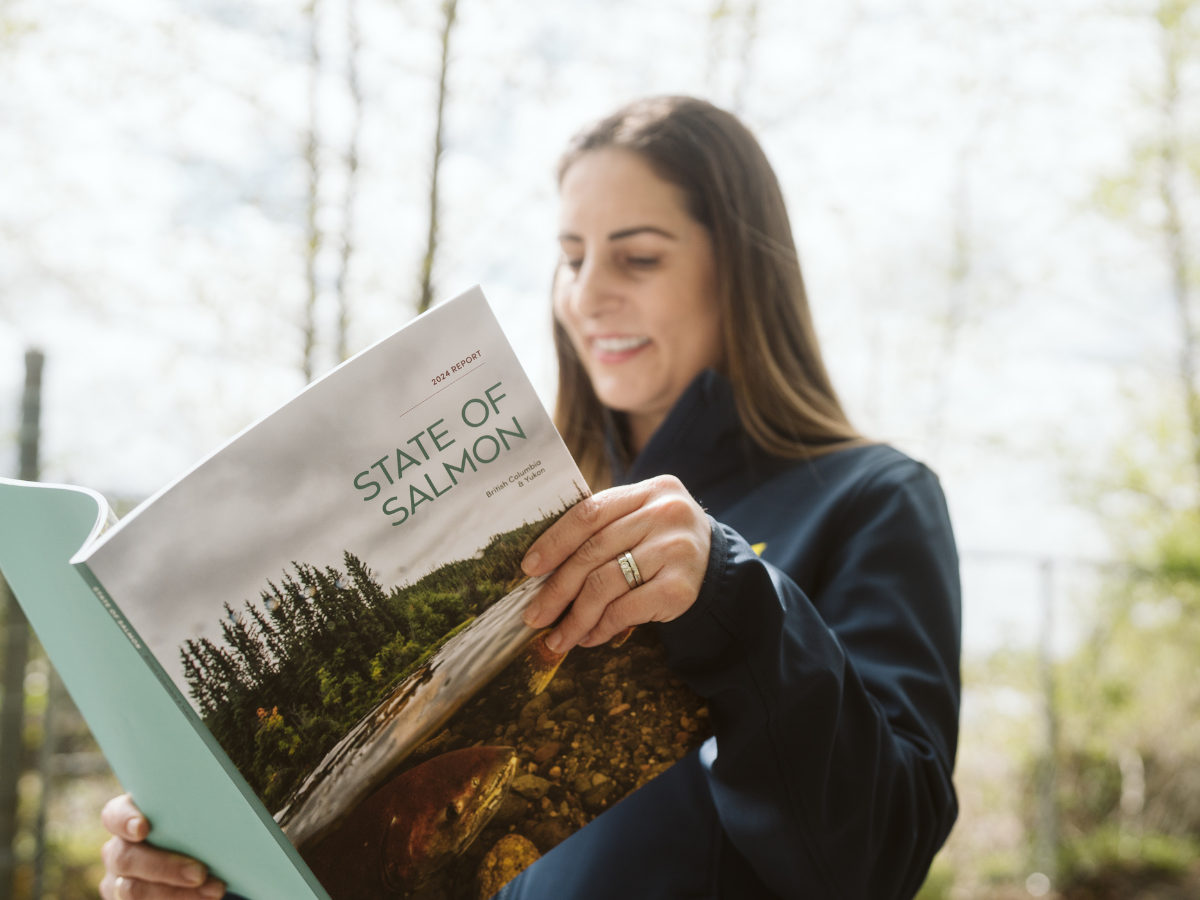
State of Salmon
Building on the initial launch in 2024, PSF released its second State of Salmon report this year, providing an improved data-driven overview of the state and trends for all six species of Pacific salmon throughout 10 regions in B.C. and the Yukon. This year’s report highlights both signs of recovery for some species in some regions and areas of conservation concern. The report found that two-thirds of Pacific salmon populations in British Columbia and the Yukon are below their long-term averages, yet it also identified some recent improvements and reasons for hope.
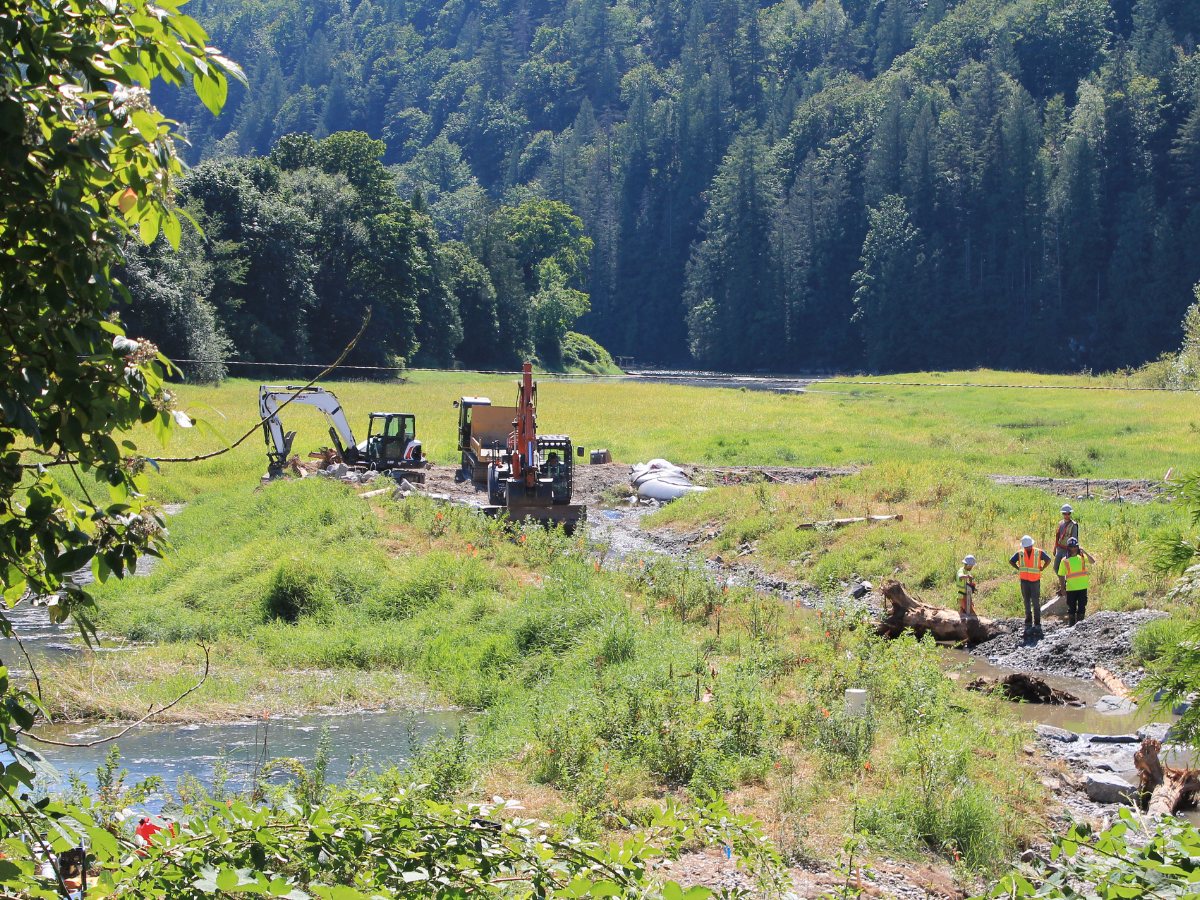
Creating a safe space for Chinook salmon in the Lower Fraser
With a $112,384 grant from PSF’s Community Salmon Program, Sq’éwqel (Seabird Island Band) and DFO restored key spawning channels in Sqémelech (Maria Slough) near Agassiz. Severe drought conditions have restricted habitat connectivity and limited fish passage for a Chinook salmon population designated as endangered by COSEWIC. In 2025, crews redistributed spawning gravel throughout the channel and added boulders and logs to cool the water, boost oxygen levels, and keep flows moving through the summer heat.

Pacific Salmon Explorer expands into the Yukon
PSF has added the final Pacific salmon-bearing region in Canada – the Yukon – to the Pacific Salmon Explorer, where users can explore the best available data on Pacific salmon and their habitats. Of the 20 Yukon River salmon Conservation Units (CUs), PSF found that 16 are struggling and four are data-deficient. Most Yukon salmon are now considered at risk, with two-thirds of Chinook and all chum evaluated as ‘poor’. Coho could not be assessed due to limited data.
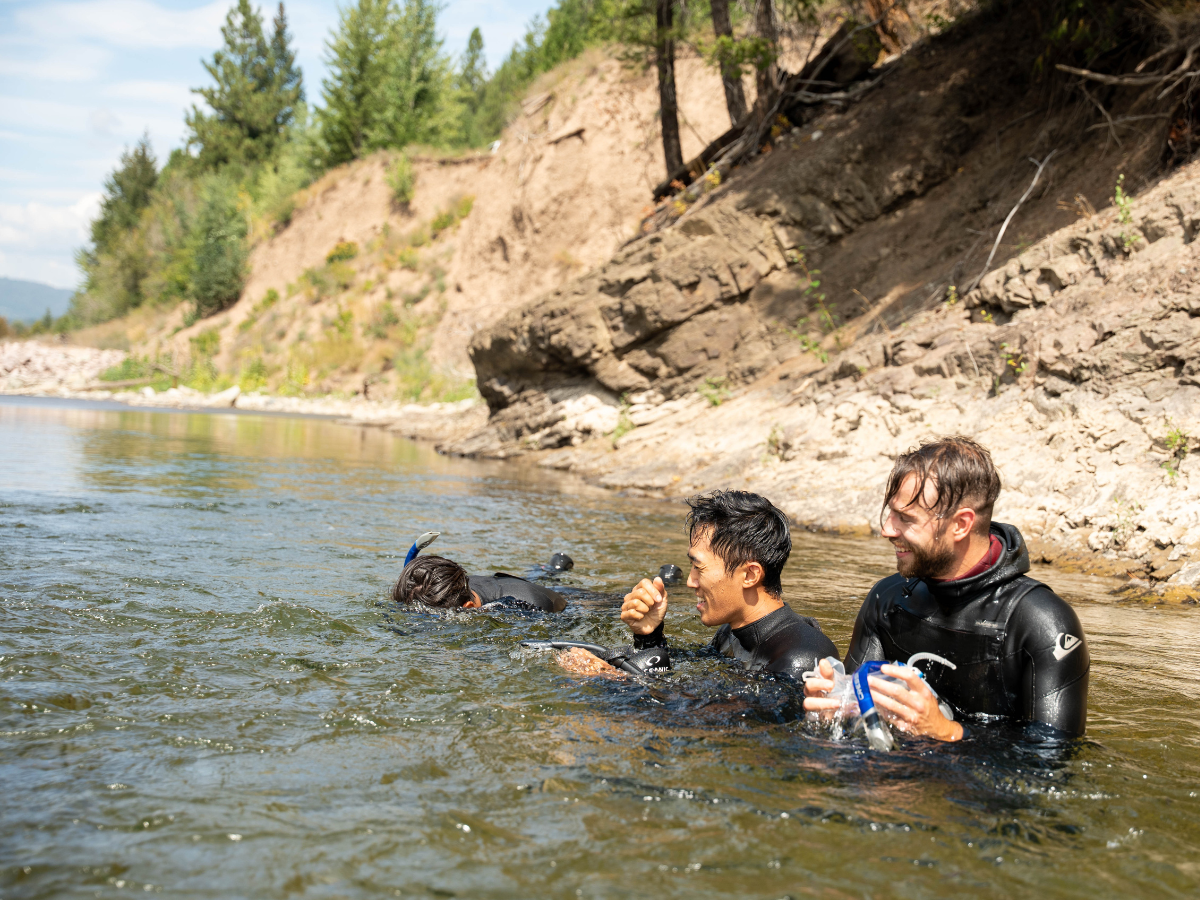
Finding the ‘cold’ in the Coldwater River
In 2025, the Scw’exmx Tribal Council, Citxw Nlaka’pamux Assembly (CNA), and Raincoast Conservation Foundation launched a pilot project to help salmon adapt to warming waters in the Coldwater River near Merritt. With support from PSF and Dr. Eric Saczuk from BCIT, local crews learned to use thermal drones to map cool-water refuges — naturally cooler patches of water that salmon seek out for relief from heat stress. PSF and Dr. Saczuk have trained 10 Indigenous partners across B.C. to map and monitor salmon habitat using this technology.
The British Columbia Salmon Restoration and Innovation Fund (BCSRIF) – a joint program from the Government of Canada and Province of British Columbia – supports this project.
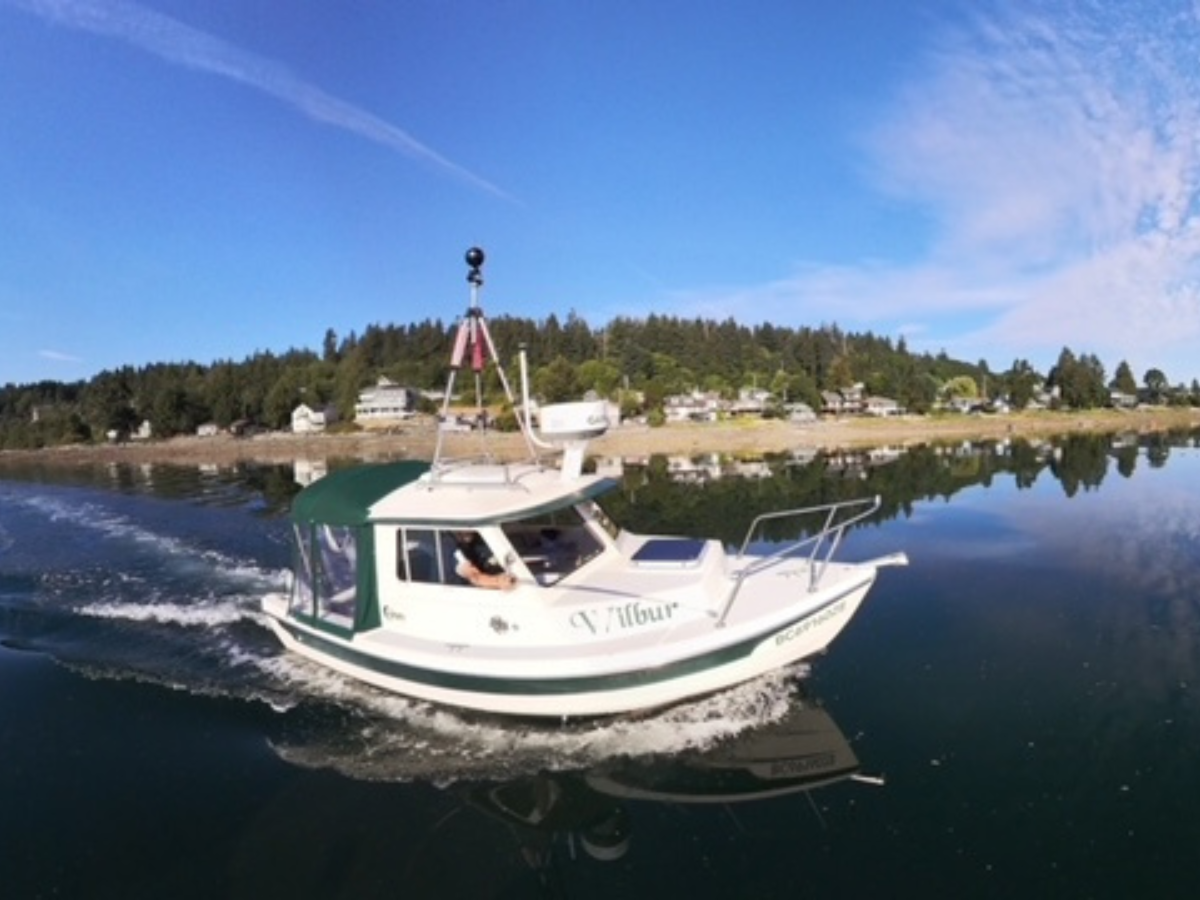
Vancouver Island coastline mapping completed
As part of the Resilient Coasts for Salmon project, PSF’s little 16-foot research boat, Wilbur, mapped the entire east coast of Vancouver Island between 2021 and 2024. The aim of this mammoth mapping effort was to document the extent of coastal modifications and hard-armouring along our shoreline – structures like docks, piers, and seawalls – as well as log accumulation along the shoreline. Over recent months, the team has been digitizing that data and will be presenting in front of municipalities and First Nations in early 2026 to ensure the health of our shorelines is considered in future decision-making around coastal adaptation and planning.
Wild Salmon Day gets global traction
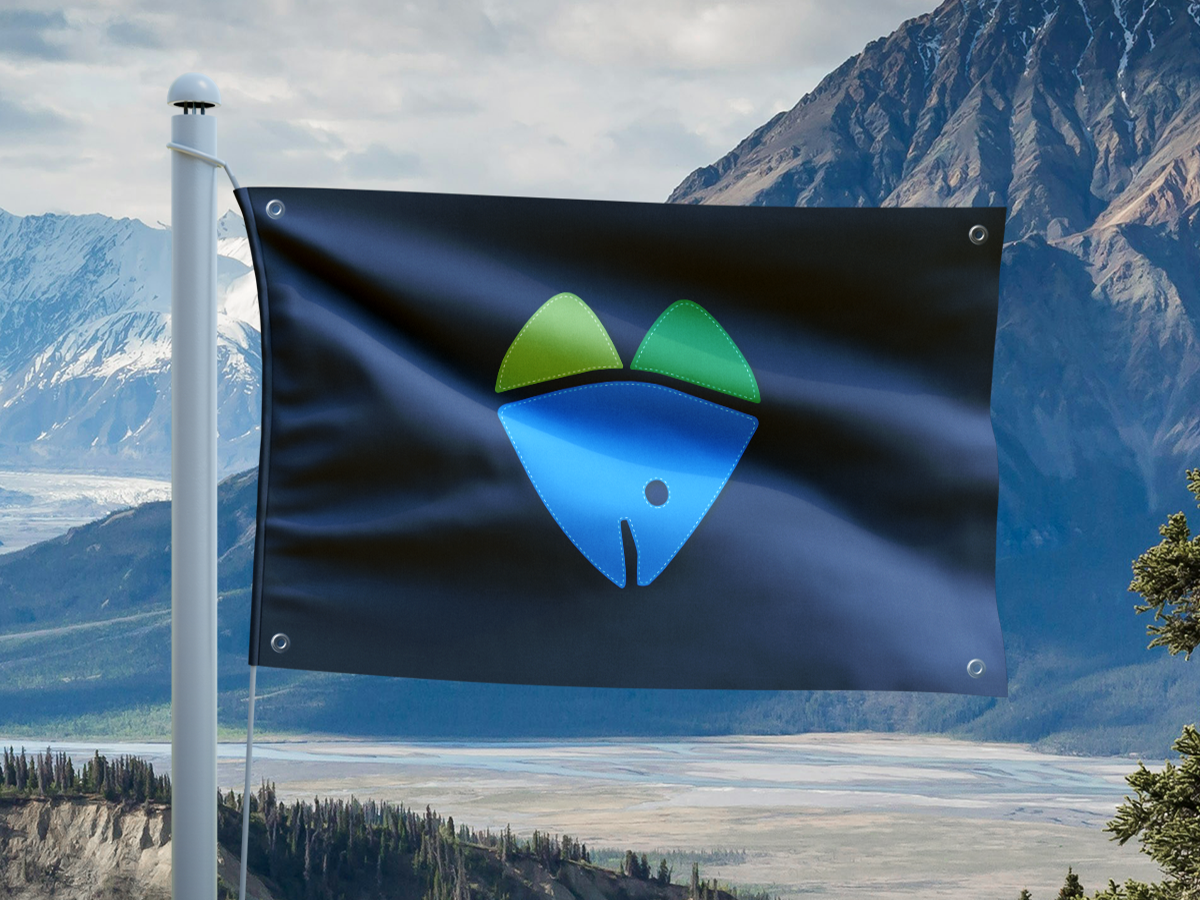
Wild Salmon Day grew into an international movement this year. , Wild Salmon Day began as an opportunity to celebrate the vital cultural and ecological role of salmon in B.C. and the Yukon. In 2025, organizations from both coasts and beyond — including PSF, First Nations Fisheries Council of B.C., Atlantic Salmon Trust (U.K.), and Atlantic Salmon Federation (Atlantic Canada) – joined forces to build global momentum for wild salmon recovery. Together, the cross-border collective launched a new website, flag, and social media campaign calling for urgent action to recover wild salmon and their habitats.
Good news!
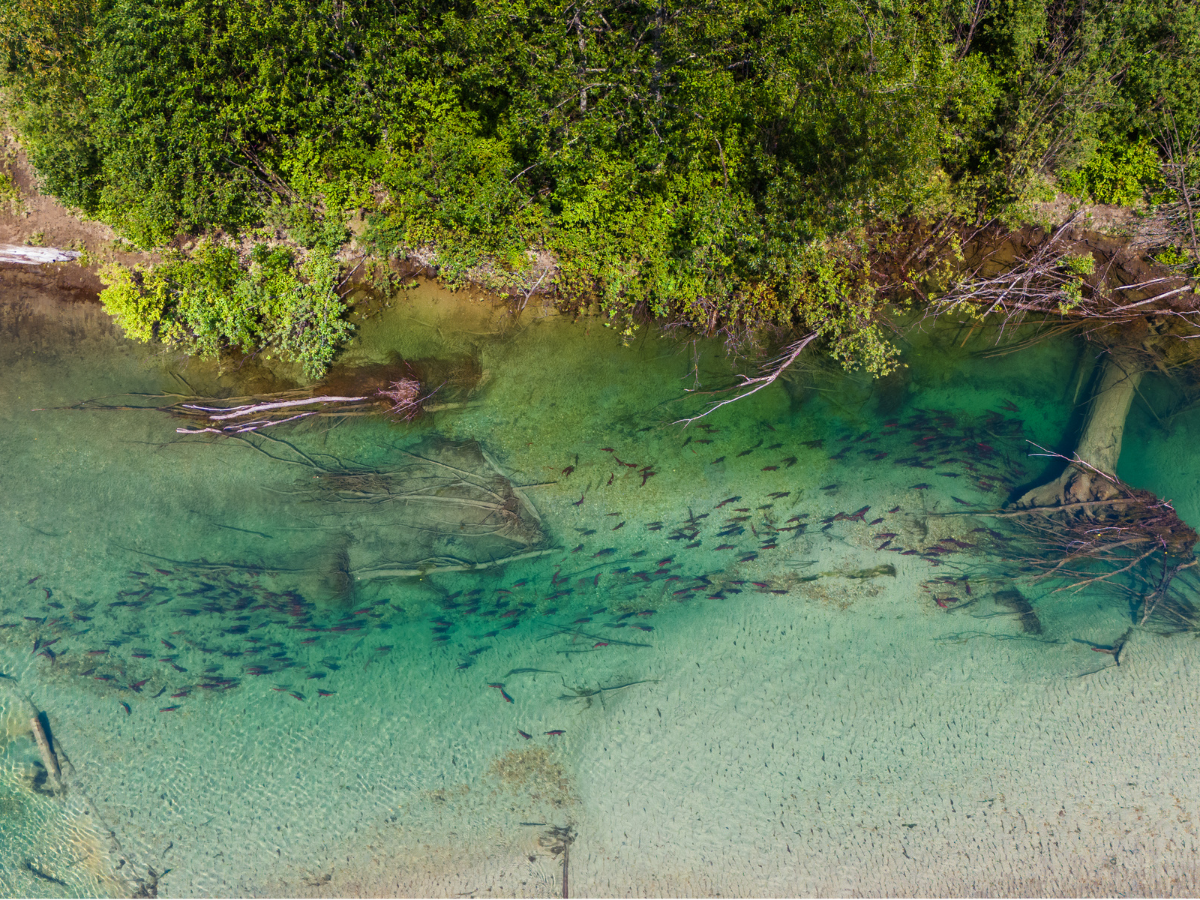
While most salmon populations in B.C. and the Yukon are in long-term decline, there were bright spots worth celebrating this year. The Fraser River saw unexpectedly strong sockeye returns and a pink salmon run. PSF helped raise awareness of these positive salmon returns through our Salmon Spotting campaign, which invited people to witness the salmon migration in person using an interactive map of more than 90 locations across B.C. and the Yukon.
In the Upper Columbia River, two sockeye tagged as juveniles in 2023 returned as adults this summer — the first such return in nearly a century — marking a major milestone for the Indigenous-led Bringing the Salmon Home Initiative.
South of the border, a Chinook salmon passed through a fish ladder in Oregon’s upper Klamath River, reaching farther than any recorded return since four lower-river dams were removed between 2023 and 2024.
We all need salmon
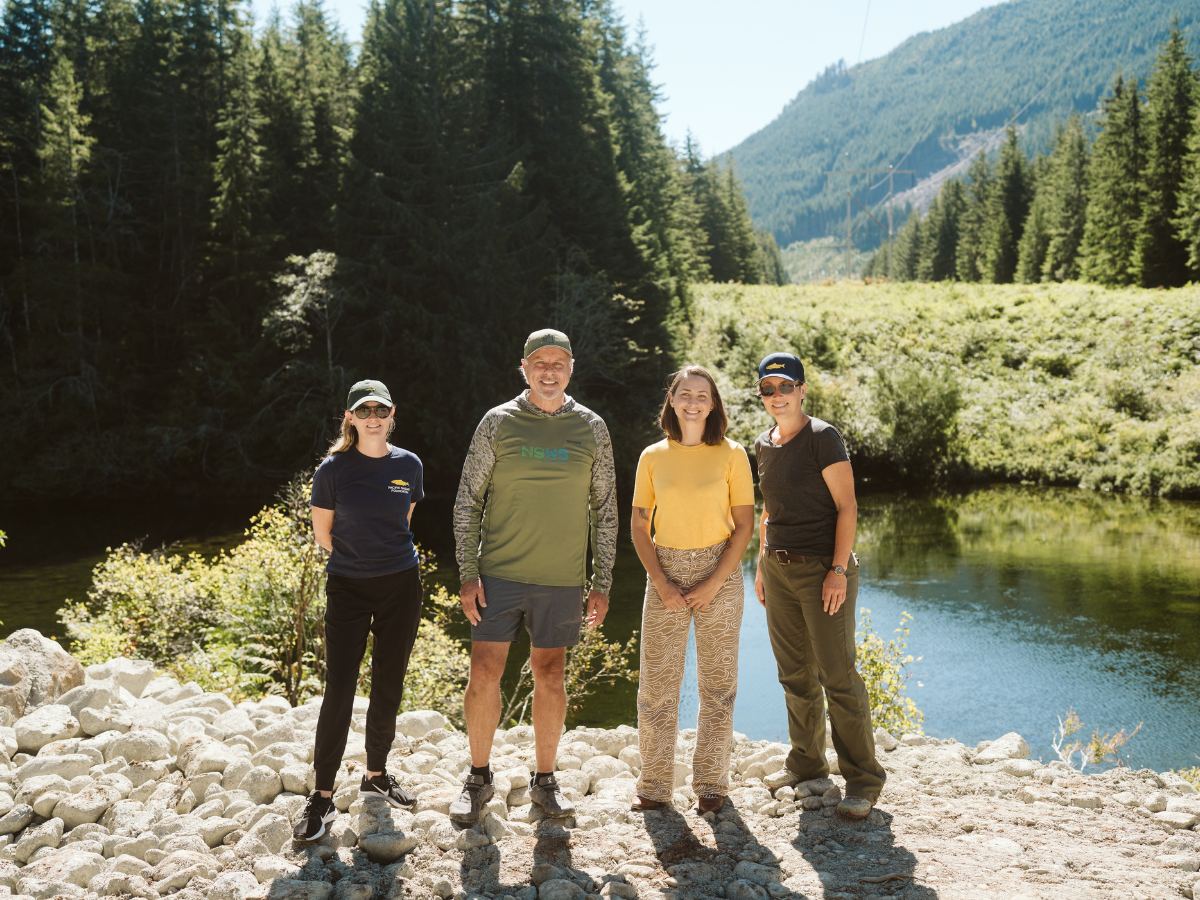
Thank you for supporting Pacific salmon and their habitats, making 2025 a productive year for salmon recovery and resilience. We look forward to building on this energy next year to create a better, brighter future for Pacific salmon across B.C. and the Yukon. When salmon win, we all win.
Thank you for standing with us in this critical work — together, we can help accelerate salmon recovery.

