
 https://psf.ca/wp-content/uploads/2026/04/psf_59-scaled.jpg
1440
2560
Braela Kwan
/wp-content/uploads/2022/04/PSF-Logo-2022-min.png
Braela Kwan2026-04-22 13:51:352026-07-27 15:56:30The latest on open-net pen salmon farms in B.C.
https://psf.ca/wp-content/uploads/2026/04/psf_59-scaled.jpg
1440
2560
Braela Kwan
/wp-content/uploads/2022/04/PSF-Logo-2022-min.png
Braela Kwan2026-04-22 13:51:352026-07-27 15:56:30The latest on open-net pen salmon farms in B.C.About Salmon Health
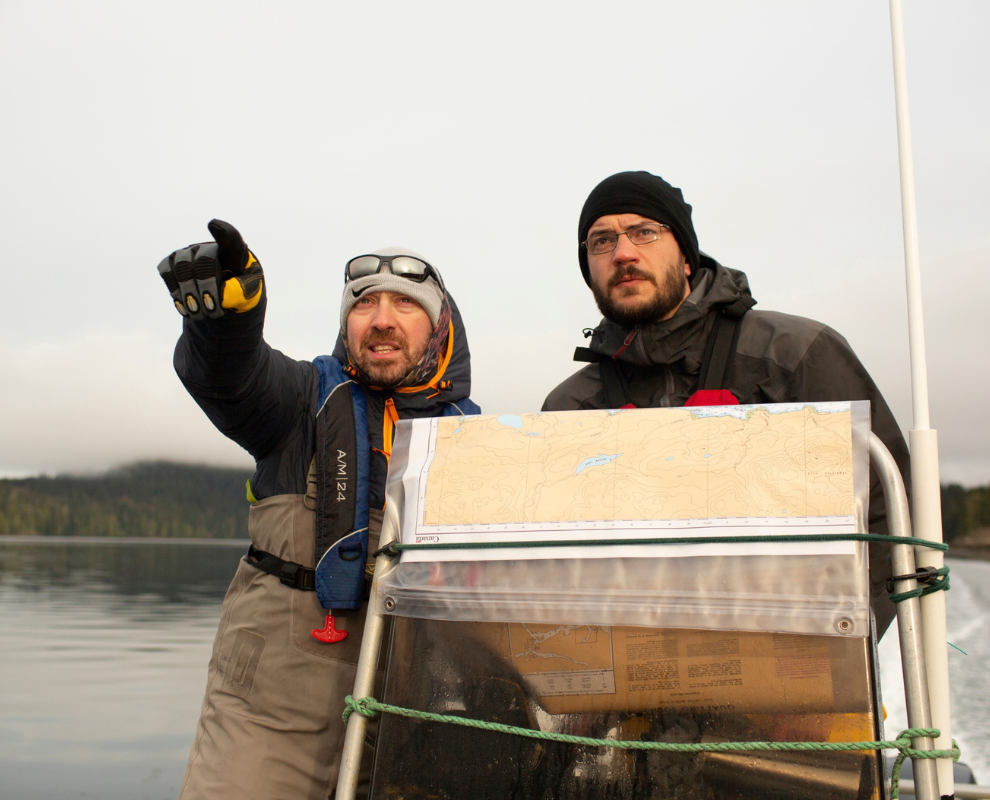
Our Salmon Health Team conducts research and publishes peer-reviewed science to better understand how environmental stressors—including infectious agents, disease, temperature, salinity, and oxygen levels—affect salmon survival.
We evaluate the impacts of open-net pen Atlantic salmon farms on wild Pacific salmon and advance innovative monitoring and diagnostic tools. Through this work, we produce the independent science needed to guide evidence-based actions and policies.
Established in 2022, the Salmon Health Team builds on the Strategic Salmon Health Initiative – a research partnership that was instrumental in developing new technology and building scientific consensus on how infectious agents affect the health of wild Pacific salmon in British Columbia.
Areas of Work

Independent science on pathogens and disease
Over more than a decade, PSF and partners have published dozens of studies on the risks that pathogens and disease – amplified by the presence of open-net pens – pose to wild Pacific salmon. This research has identified parasites, bacteria, and viruses that may be concentrated near open-net pen farms and can spread to wild Pacific salmon and contribute to disease burden. Ongoing research will continue building on this body of scientific evidence.
Before-and-after analysis of open-net pen impacts
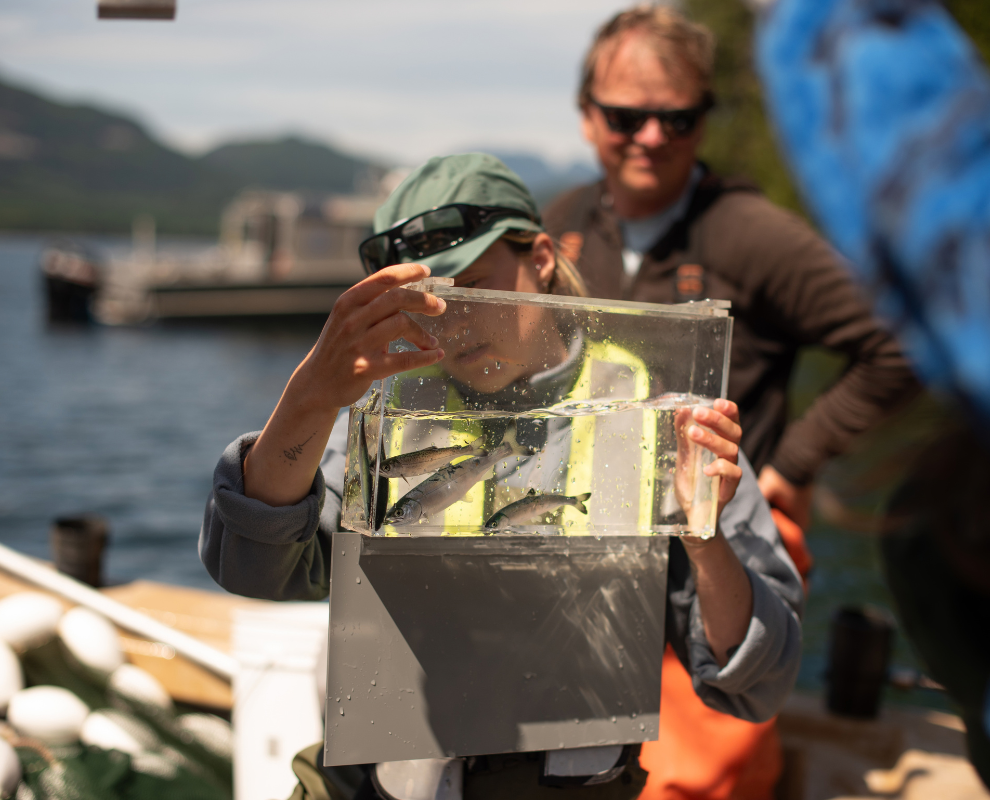
Each year, PSF and the University of Toronto monitor wild juvenile salmon in the Discovery Islands to better understand how open-net pen farms affect wild salmon. With the farms phased out of the region between 2021 and 2022, researchers will be able to compare sea lice counts, pathogens, and other data from when the farms were active against data following their removal. The annual spring monitoring is ongoing.
Unpacking Chinook survival on Vancouver Island
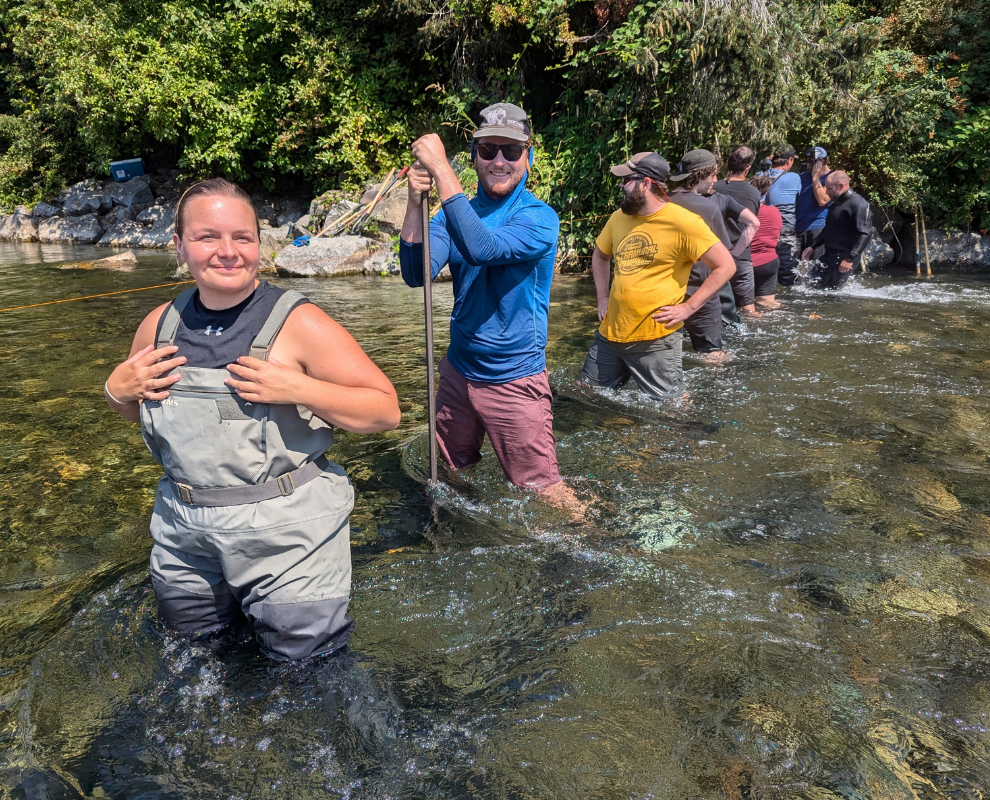
PSF and Ha’oom Fisheries Society are investigating the factors impacting threatened Chinook salmon from the West Coast of Vancouver Island. Their multi-year research project involves tagging fish to determine when and where they are dying, and combining this survival data with information on pathogens and environmental stress, gathered from environmental DNA/RNA (eDNA/RNA) and from ‘Fit-Chips’ – a technology similar to what’s used in personalized human medicine.
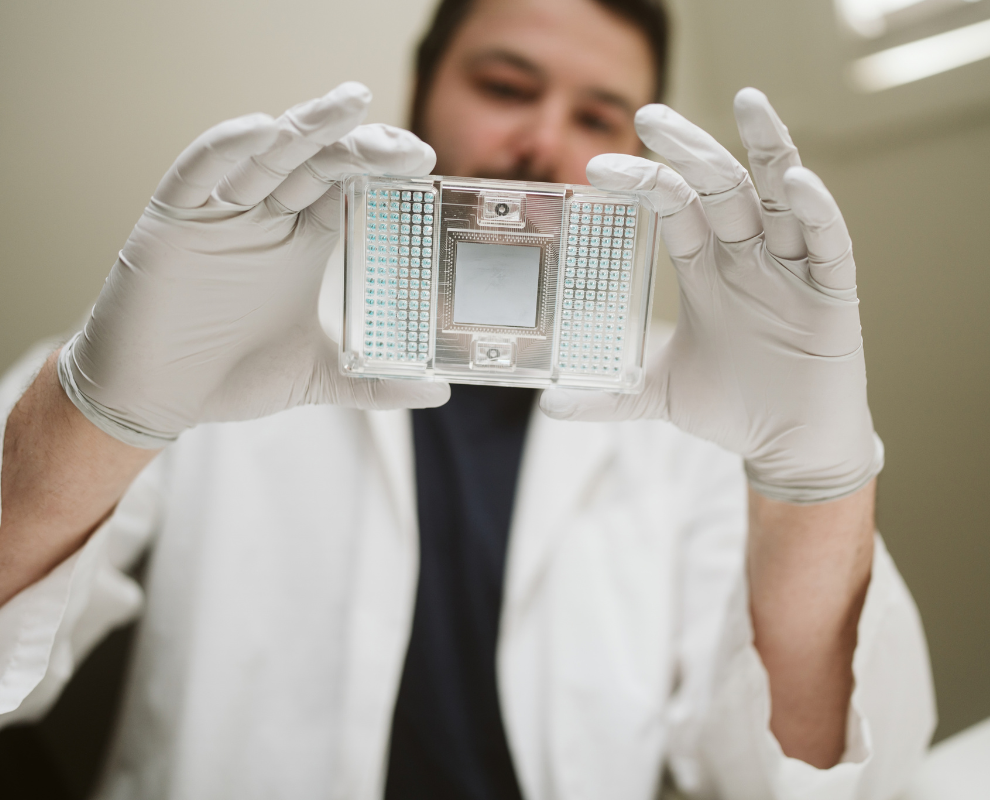
Cutting-edge Fit-Chip technology
Fit-Chips, a technology developed by Dr. Kristi Miller at DFO with support from PSF, can link salmon survival to specific stressors by showing which genes are activated in response to pathogens and other stressors. It acts as a rapid health assessment for fish. PSF and the Genome Science Centre are currently developing a plan to make Fit-Chips more accessible and expand the technology’s reach.
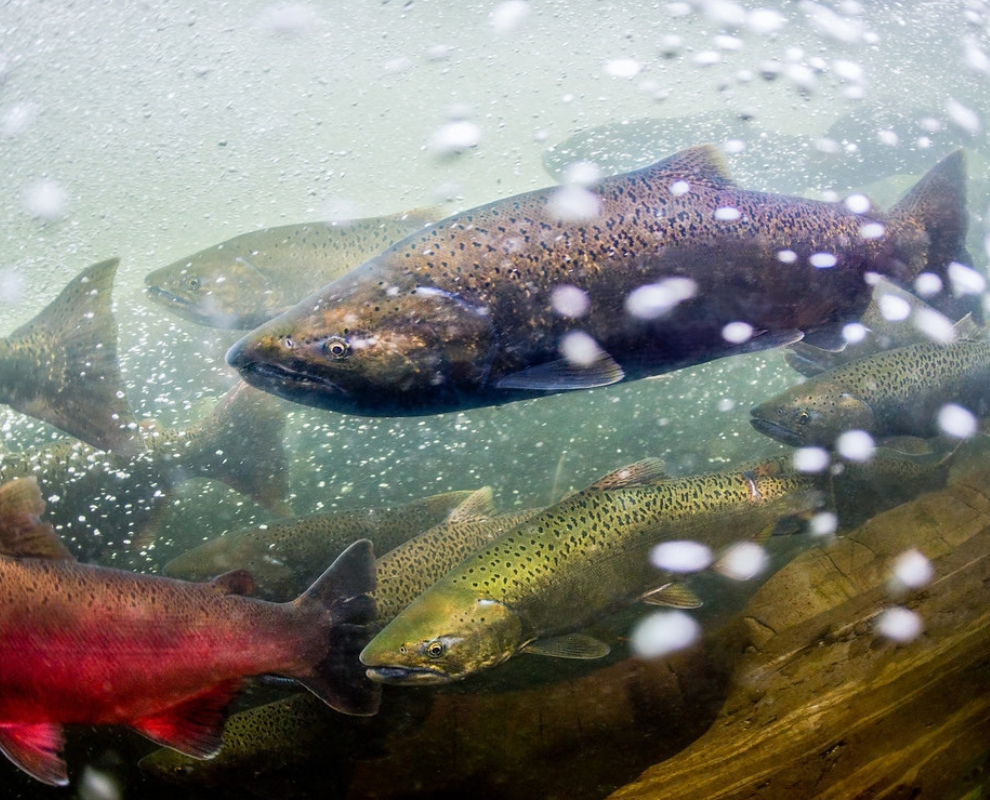
Funding innovation in genetic stock identification
Ha’oom Fisheries Society and Vancouver Island University are using salmon genetic stock identification to detect the origins of wild and hatchery fish, analyze salmon at all life stages, and inform conservation decisions. By decentralizing this analysis, they’re strengthening First Nations sovereignty over key salmon data. This work is supported by PSF, the First Nations Fisheries Council of B.C., and Genome BC.
Policy Meets Science
In 2018, after years of research, PSF released a statement calling for a transition away from open-net pen salmon farming in B.C.’s waters, in favour of land-based closed containment.
Since 2018, PSF has continued to build the peer-reviewed body of evidence linking open-net pens to risks for wild Pacific salmon.
Between 2020 and 2023, many open-net pens were removed from the Discovery Islands, Sunshine Coast, and Broughton Archipelago.
In 2024, the Government of Canada announced that open-net pen salmon farms would be banned in B.C. by 2029.
Download a research summary on the risks open-net pens pose to B.C.’s wild Pacific salmon.
Building on Past Work: Highlights
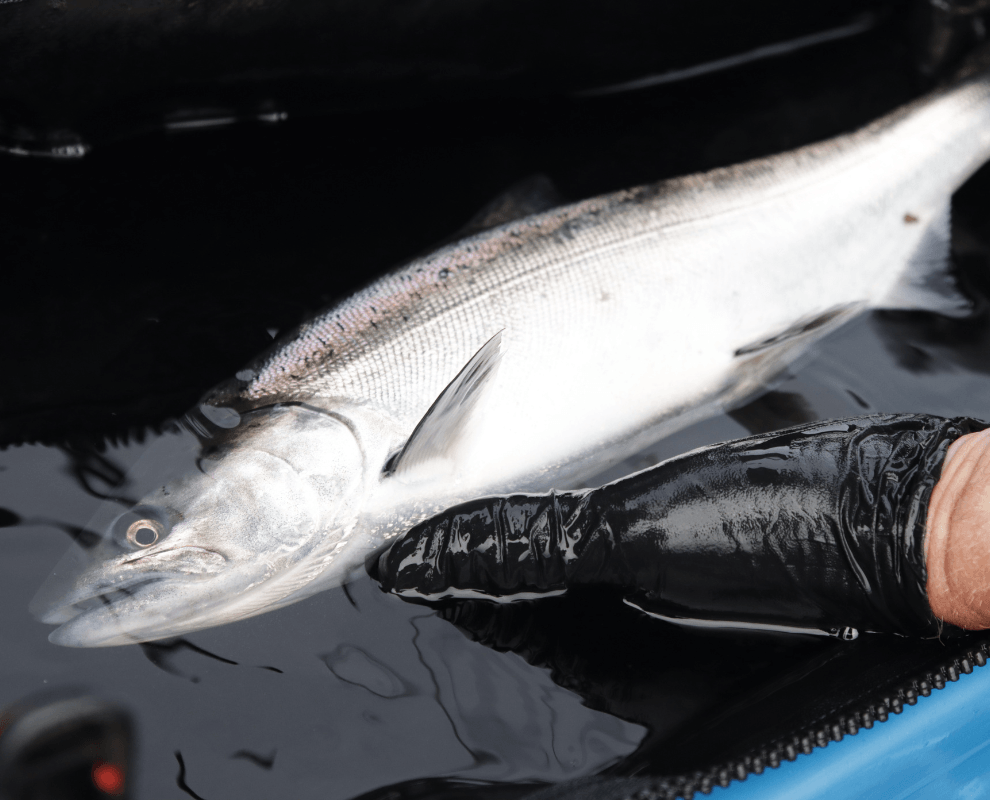
Strategic Salmon Health Initiative (2013 to 2020)
The eight-year Strategic Salmon Health Initiative was a partnership between PSF, DFO, and GenomeBC that embarked to better understand how infectious agents affect wild salmon health, where these agents come from, and interactions between farmed and wild salmon. The Strategic Salmon Health Initiative laid the foundation for PSF to launch our current Salmon Health research.
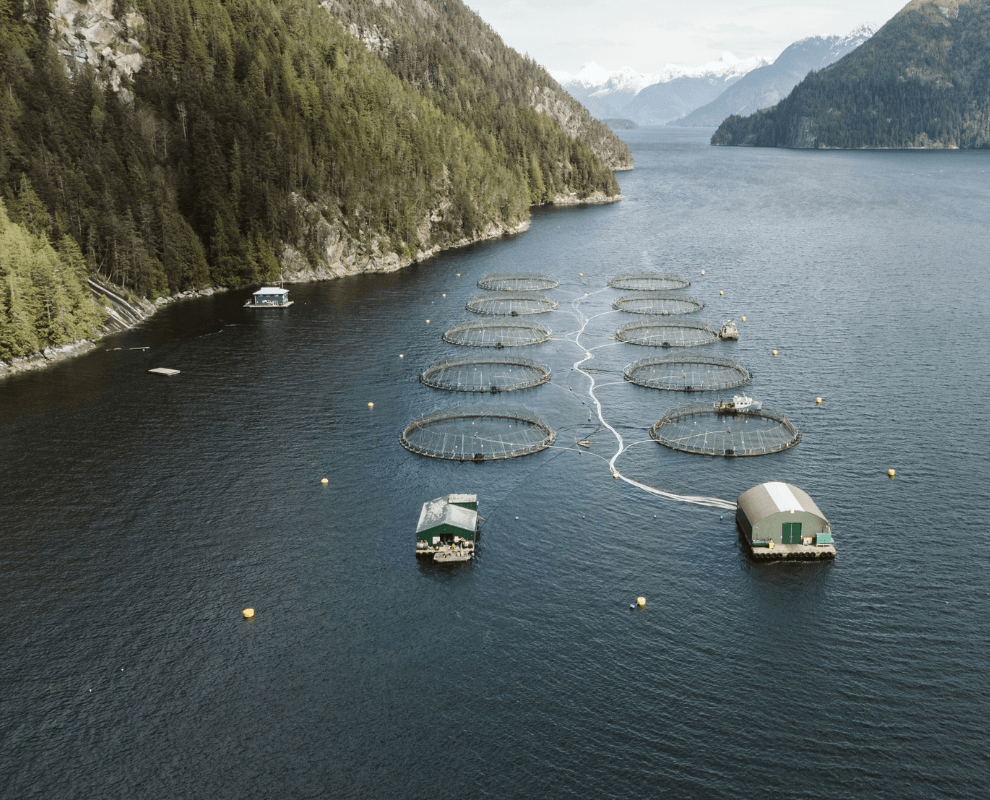
Broughton Archipelago Research Partnership
PSF was a close partner on the former Broughton Aquaculture Transition Initiative, a project led by the Mamalilikulla, ‘Na̱mg̱is, and Kwikwasut’inux Haxwa’mis First Nations. Through this project, partner Nations and PSF researchers conducted regular monitoring in and around the active and decommissioned open-net pen salmon farms.
News and Stories
https://psf.ca/wp-content/uploads/2026/04/psf_59-scaled.jpg
1440
2560
Braela Kwan
/wp-content/uploads/2022/04/PSF-Logo-2022-min.png
Braela Kwan2026-04-22 13:51:352026-07-27 15:56:30The latest on open-net pen salmon farms in B.C.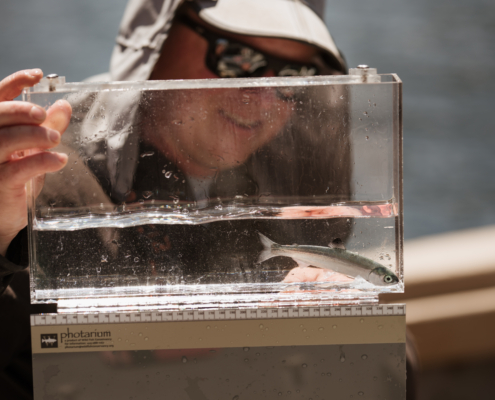 https://psf.ca/wp-content/uploads/2025/11/psf_54-scaled.jpg
1709
2560
Braela Kwan
/wp-content/uploads/2022/04/PSF-Logo-2022-min.png
Braela Kwan2026-01-19 10:00:292026-07-27 15:58:37After the fish farms
https://psf.ca/wp-content/uploads/2025/11/psf_54-scaled.jpg
1709
2560
Braela Kwan
/wp-content/uploads/2022/04/PSF-Logo-2022-min.png
Braela Kwan2026-01-19 10:00:292026-07-27 15:58:37After the fish farms https://psf.ca/wp-content/uploads/2022/05/Tavish-Campbell-28-1.jpg
853
1279
Braela Kwan
/wp-content/uploads/2022/04/PSF-Logo-2022-min.png
Braela Kwan2025-04-15 08:00:212026-07-27 15:59:09Open-net pen Atlantic salmon farms in B.C. release elevated pathogen levels, study finds
https://psf.ca/wp-content/uploads/2022/05/Tavish-Campbell-28-1.jpg
853
1279
Braela Kwan
/wp-content/uploads/2022/04/PSF-Logo-2022-min.png
Braela Kwan2025-04-15 08:00:212026-07-27 15:59:09Open-net pen Atlantic salmon farms in B.C. release elevated pathogen levels, study finds