Habitat & Ecosystem Science
Uncovering why salmon decline and how they recover, from the food web to disease and survival at sea.

PSF is conducting independent research to inform recovery actions, conservation, and policy decisions.
Our scientists are working to unlock the mysteries of salmon survival in both marine and freshwater habitats and to inform actions that support their recovery.
We study the factors impacting salmon survival at every level, from disease mechanisms to how shifting food-web dynamics affect entire populations. We develop and apply innovative technologies, including DNA analysis to assess fish health and drones and AI to monitor salmon and their habitats. We work closely with First Nations and community partners to build local monitoring capacity.
We bring this information together and make it accessible through our State of Salmon Report and online tools like the Pacific Salmon Explorer. Our independent science contributes to a shared foundation of knowledge that benefits the entire salmon community: governments setting policy, First Nations and communities working within their local watersheds, and academic institutions and researchers advancing our collective understanding of salmon.
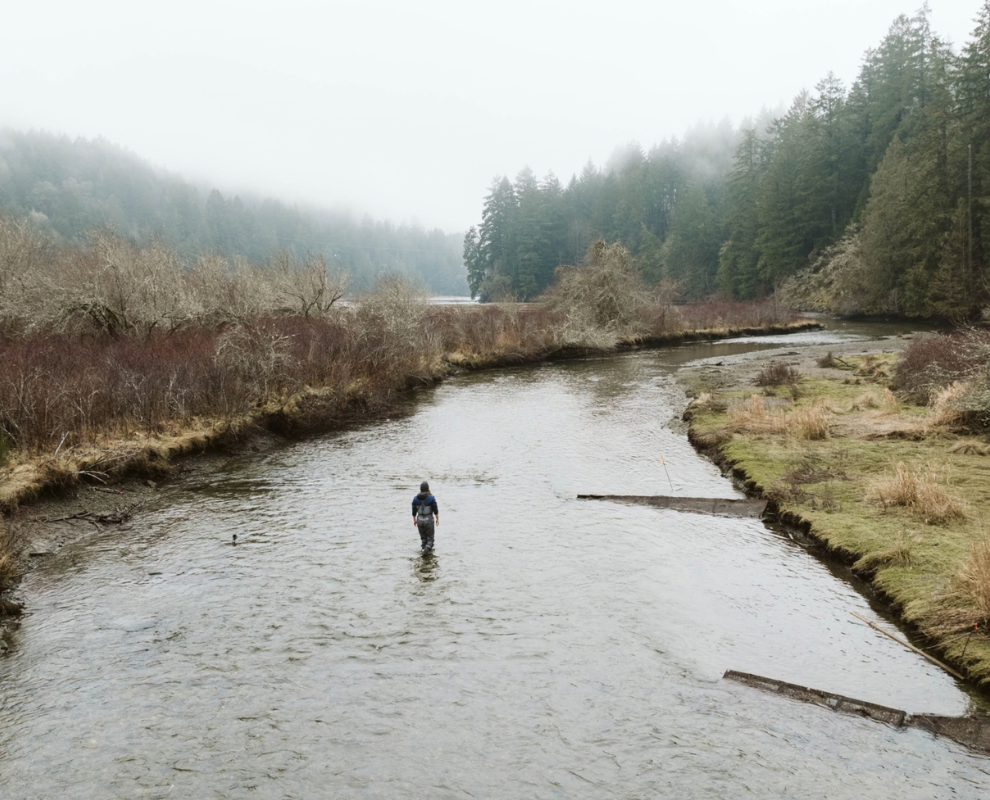
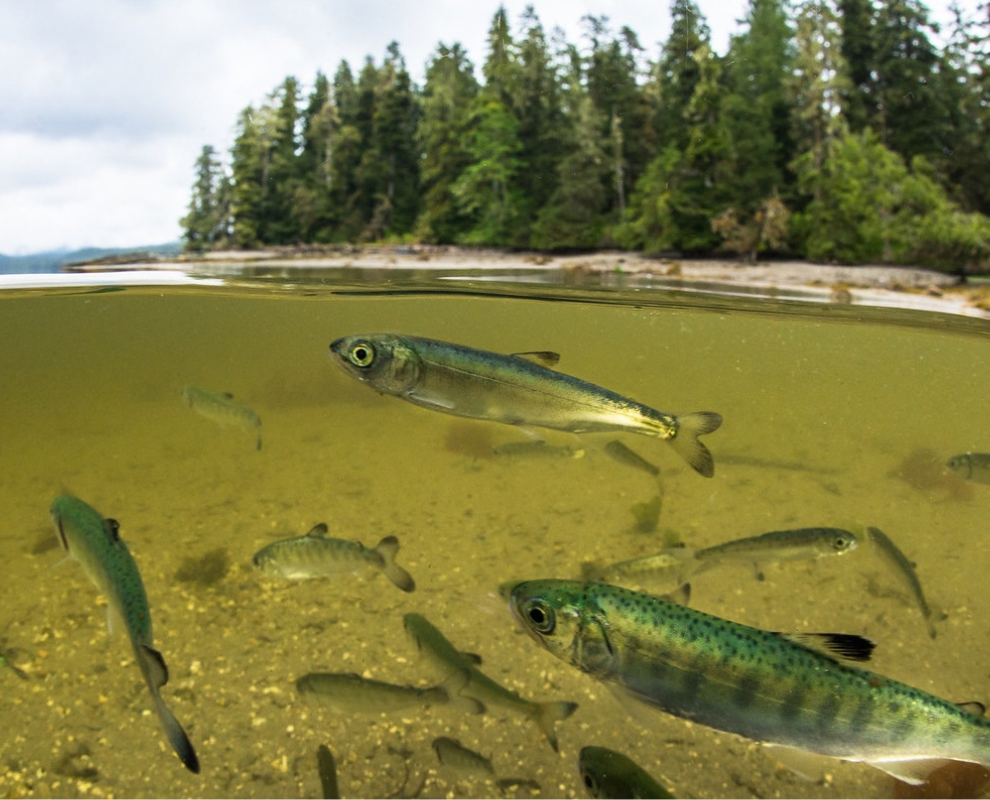
Most salmon never return to their home rivers to spawn. Knowing where and why they’re lost is key to effective recovery planning. We track juvenile salmon from rivers through their first winter at sea and study how food sources like herring affect their survival.
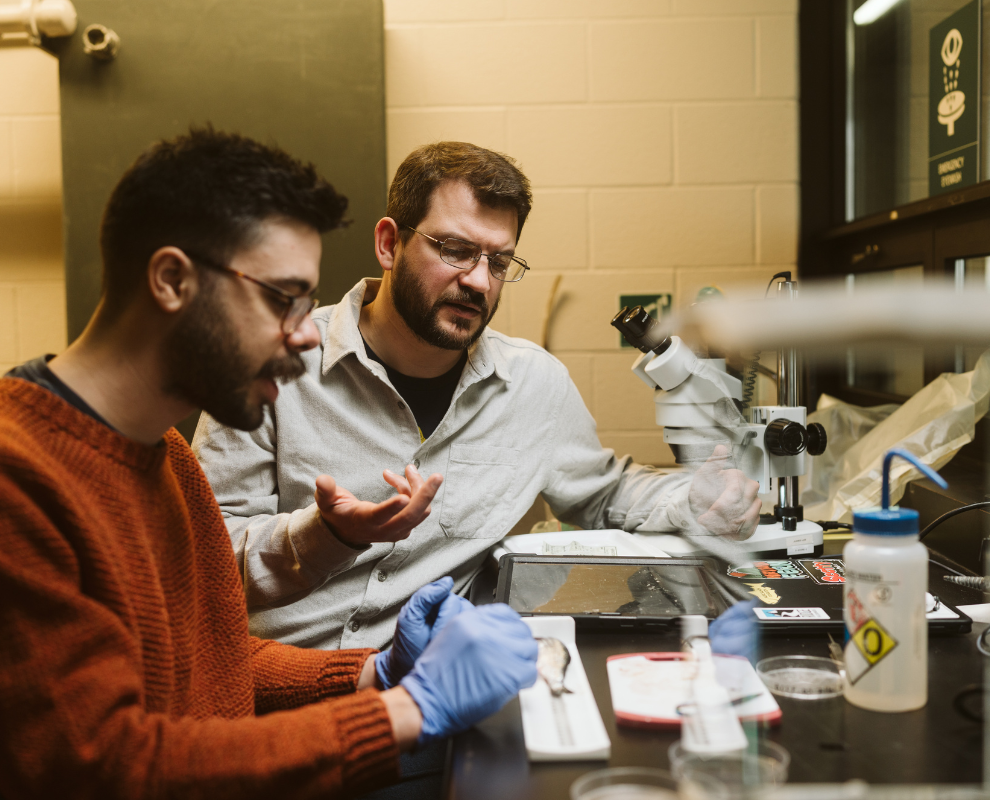
Pathogens, disease, and environmental stressors such as warming water, low oxygen, and shifting salinity can weaken salmon and reduce their survival chances. We study how these pressures affect wild salmon, including the risks posed by open-net pen aquaculture and how conditions change once farms are removed. With First Nations and academic partners, we use genetic tools that link a salmon’s survival to the specific stressors it faces.
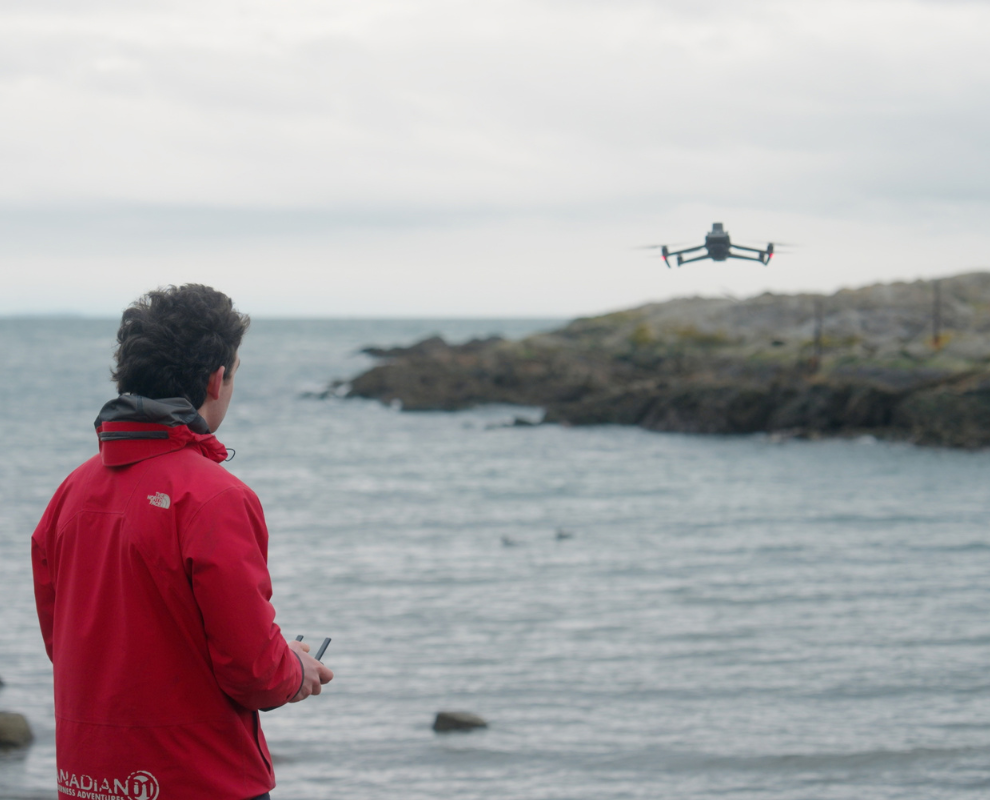
Salmon returns vary widely, and monitoring has declined in many regions, making it challenging to see where salmon are most at risk. We track salmon and habitat status and develop new ways to detect emerging pressures, from drought and forest disturbance to barriers that fragment watersheds. We also equip First Nations and community stewards to monitor stream temperature and flow, so they can mobilize if conditions deteriorate.
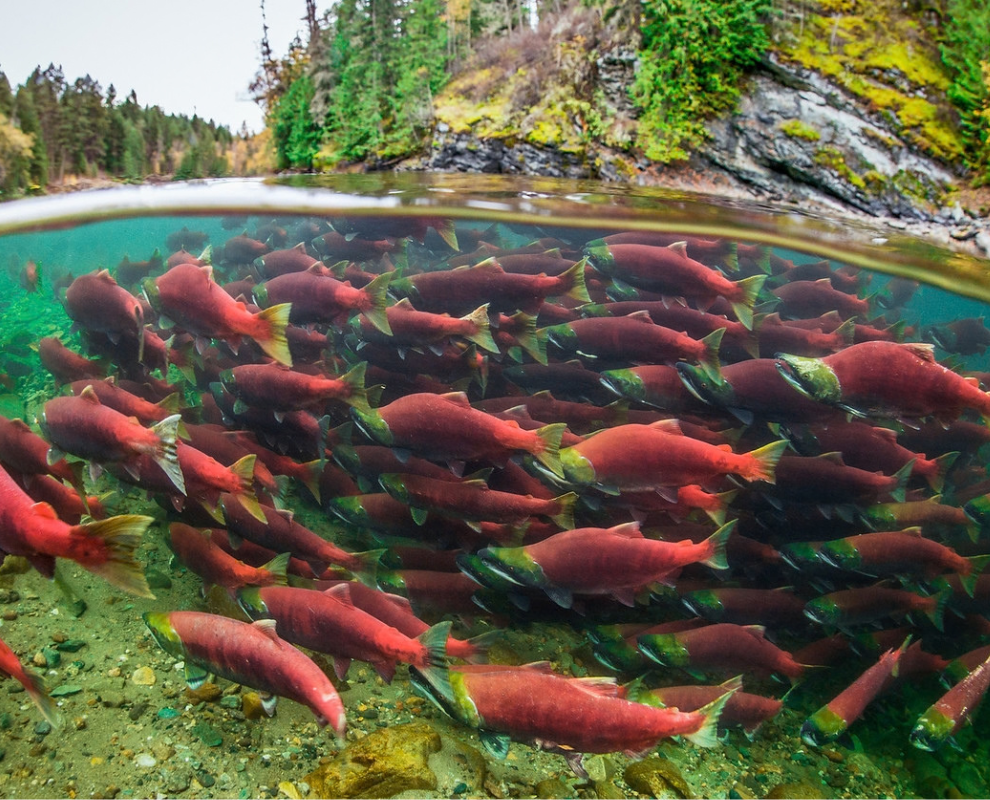
Good decisions depend on good information, but salmon data are too often scattered across jurisdictions and organizations. We standardize and centralize this information in open platforms like the Pacific Salmon Explorer, which tracks more than 400 salmon populations across B.C. and the Yukon. Behind the scenes, we build and maintain the systems that keep it accurate, secure, and up to date.
From AI-enabled cameras that count returning salmon to drones and tracking tags, new technology is helping us see what’s happening to salmon more often and in more places. With First Nations and research partners, we’re piloting AI-counting systems across B.C. — just one example of how we’re using tech to drive innovation in salmon science.
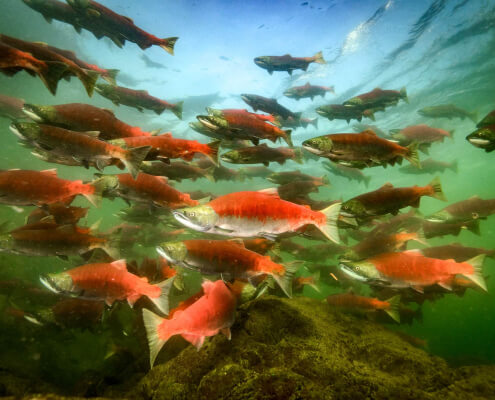 https://psf.ca/wp-content/uploads/2021/08/EikoJones_sockeye-congregate-in-deep-river.jpg
1367
2048
Tracy Green
/wp-content/uploads/2022/04/PSF-Logo-2022-min.png
Tracy Green2018-12-04 20:13:332021-09-07 17:09:42Restoring the Lower Fraser
https://psf.ca/wp-content/uploads/2021/08/EikoJones_sockeye-congregate-in-deep-river.jpg
1367
2048
Tracy Green
/wp-content/uploads/2022/04/PSF-Logo-2022-min.png
Tracy Green2018-12-04 20:13:332021-09-07 17:09:42Restoring the Lower Fraser https://psf.ca/wp-content/uploads/2021/08/bg-about.jpg
820
1200
Tracy Green
/wp-content/uploads/2022/04/PSF-Logo-2022-min.png
Tracy Green2018-11-20 03:28:412021-09-07 17:09:42Cleaning up the Salish Sea
https://psf.ca/wp-content/uploads/2021/08/bg-about.jpg
820
1200
Tracy Green
/wp-content/uploads/2022/04/PSF-Logo-2022-min.png
Tracy Green2018-11-20 03:28:412021-09-07 17:09:42Cleaning up the Salish Sea https://psf.ca/wp-content/uploads/2021/08/2014-Orca-Salish-SEa-Boat_0.jpg
900
1432
Tracy Green
/wp-content/uploads/2022/04/PSF-Logo-2022-min.png
Tracy Green2018-07-30 03:34:432021-09-07 17:09:42Disregard for scientific process does not “Discredit” valid research
https://psf.ca/wp-content/uploads/2021/08/2014-Orca-Salish-SEa-Boat_0.jpg
900
1432
Tracy Green
/wp-content/uploads/2022/04/PSF-Logo-2022-min.png
Tracy Green2018-07-30 03:34:432021-09-07 17:09:42Disregard for scientific process does not “Discredit” valid research