Ashes in the current: hope and recovery in B.C.’s most famous salmon river
Photo credits: Brandon Deepwell
This story originally appeared in the Fall/Winter 2026 edition of Salmon Steward, the Pacific Salmon Foundation’s print magazine.

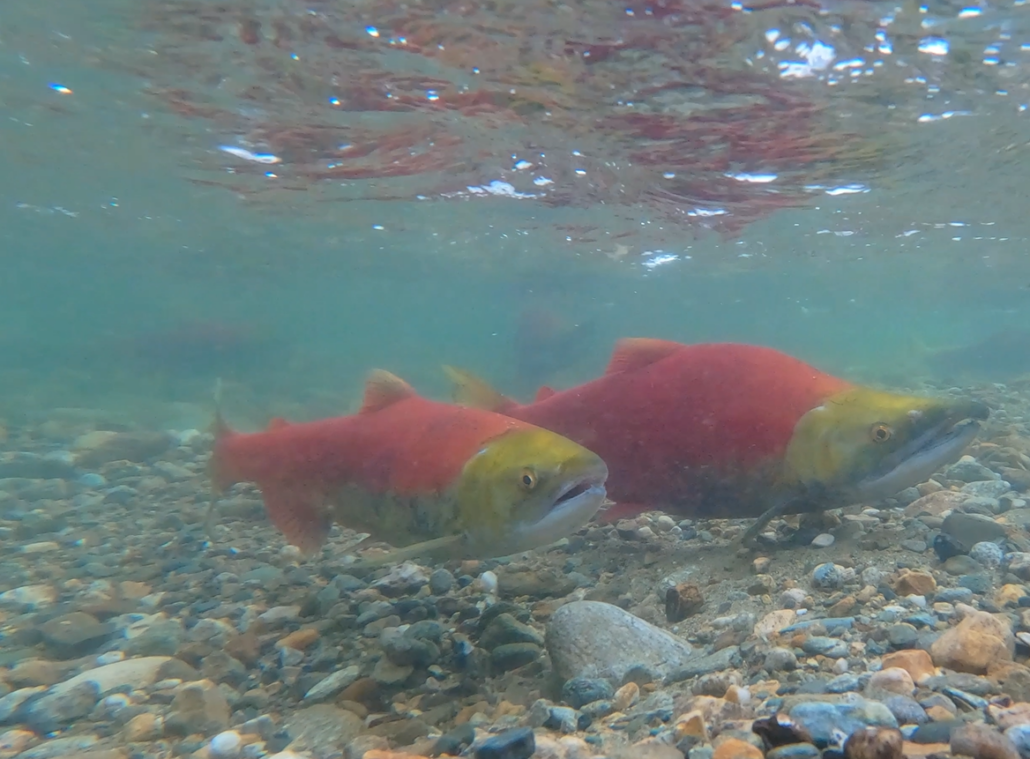
Witnessing the sockeye salmon migration at the Adams River is one of Canada’s greatest natural events.
Every four years during a ‘dominant’ cycle, hundreds of thousands to millions of bright red sockeye salmon make the 450-kilometre journey from the mouth of Fraser River near Vancouver, all the way into the Interior of British Columbia. It’s a gruelling journey through canyons and rapids, all while avoiding predators, battling low flows, and persisting through high river temperatures.
2026 is a dominant sockeye year, attracting hundreds of thousands of visitors from around the world to the Shuswap region of B.C. to see the end of this epic migration in October.
This year, the landscape looked drastically different from the previous dominant sockeye cycle in 2022. That’s because large swathes of the watershed were decimated by the Bush Creek East wildfire three summers ago.
The fire ripped through 45,000 hectares, forced 8,000 people to evacuate, destroyed 270 properties, and caused $240 million in damage. What used to be a lush green forest full of hiking trails is now a barren vista of burned trees.
The devastation spurred on a determined group of partners set on tackling the impacts from the wildfire and historical changes to the river. Initial talks turned into a detailed restoration project, which began earlier this year in the Lower Adams River to improve salmon spawning habitat.
Experts have found that the river has changed substantially in the last couple of decades, negatively affecting habitat like pools and side channels that salmon rely on. Instead of braiding into multiple channels, the river has become one fast-flowing channel, where salmon struggle to find suitable gravel to lay their eggs.
Led by local First Nation Skwlāx te Secwepemcúl̓ecw, along with DFO, BC Parks and PSF, work begun in March to restore the Adams’ natural channel complexity. The goal was to redistribute flows from one channel into many channels. To enable this change, excavators strategically placed woody debris in the river to divert the flow and enhance spawning habitat in time for the scheduled arrival of thousands of sockeye in the fall.
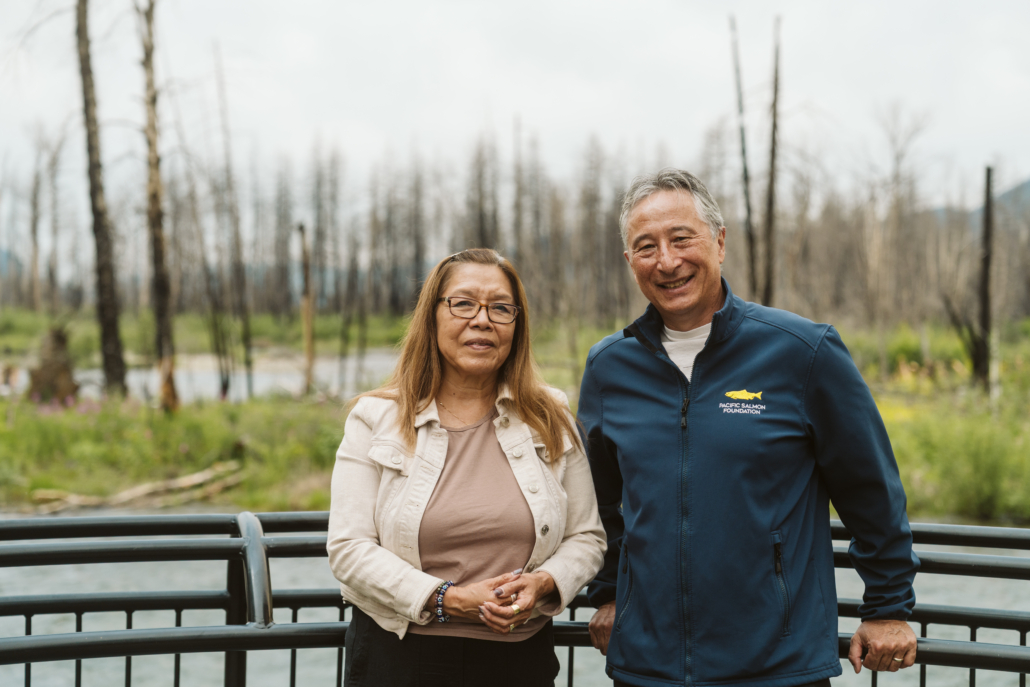
“Salmon mean everything to us as a community. This is their home,” says Kukpi7 (Chief) Dianne Francois, Skwlāx te Secwepemcúl̓ecw. “This restoration project is all about making sure that our salmon have a place to spawn when they come back.”
Pacific Salmon Foundation contributed $250,000 to the restoration work.
“We’re investing now for future generations and we’re making a difference,” says Jason Hwang, Chief Program Officer, Pacific Salmon Foundation. “It’s going to take all of us, but this project proves that when we work together, we can do great things for salmon.”
In addition to the in-river restoration project, PSF has provided $47,100 to the 2026 Salute to the Sockeye Festival held by The Adams River Salmon Society in dominant cycle years, which took place from October 9 to 25.
The celebration in Tsútswecw Provincial Park allowed visitors to get up close to salmon, as well as attend interpretative guided tours, education sessions, and First Nations traditional ceremonies. A viewing platform in the park, which was constructed in 2014 with a $50,000 grant from PSF, offers some of the best views of spawning salmon in the province for kids and families.
“People love to come and see the spectacle of all the salmon at the Adams River. It’s one of the few places that I’ve ever been where you can get up close and personal with millions of spawning sockeye salmon,” says Hwang.
The exact number of sockeye salmon returning to the Adams River is still unknown, but the Pacific Salmon Commission has downgraded its initial forecast for Fraser River sockeye from 7.7 million to three million fish. About a million of these fish are part of a population that travels to the Adams region
Sockeye returns to the Fraser, and to the Adams, have steadily declined in recent decades. Less than a million fish made it back to the Adams in 2014, 2018, and 2022. Not since 2010, when close to 4 million sockeye spawned in the Adams, have numbers truly reached the heights typically seen a hundred years ago.
This is just the beginning of restoration work in the Adams, which is set to continue in 2027.
The restoration project at the Adams River was supported by the British Columbia Salmon Restoration and Innovation Fund.

 State of Salmon: Edition 3.0