Photos courtesy of Rivers to Ridges and partners
Yukon River salmon undertake one of nature’s most extraordinary journeys, travelling more than 3,000 kilometres through the Bering Sea and Alaska to reach their spawning grounds. But Chinook, chum, and coho populations have plummeted in recent years, forcing fisheries closures and creating ripple effects for local communities and ecosystems.
With so few fish returning, this generation of young people risks growing up without experiencing salmon first-hand.
Rivers to Ridges, a Yukon-based social enterprise, is working to reconnect local youth with salmon and their watersheds through outdoor education. With support from PSF, their educators are collaborating with Indigenous knowledge holders to co-develop three new salmon-focused educational resources.

“Our goal for these booklets is to help Yukon youth understand how salmon are crucial to our ecosystems, lifeways, and culture,” says Han Shier, who leads the organization’s Salmon in the Schools program. “Since we cannot be in every class every year, we hope to provide resources for educators who want to foster care and respect for salmon and the importance of safeguarding them for future generations.”
Since 2015, Rivers to Ridges has visited almost every community in the Yukon. In the 2024-2025 school year alone, their team held workshops in 43 classrooms, engaging more than 600 students from kindergarten through high school.
Yukon salmon in crisis
The major salmon declines observed in recent years stem from a mix of factors. Climate change is transforming habitats, affecting food availability, and introducing new challenges for salmon across the Bering Sea and Yukon River watershed.
PSF has assessed the status of 20 unique population groups known as Conservation Units (CUs). The outcomes are stark: two-thirds of Chinook CUs (eight of 12) and every chum CU (five of seven) assessed are in the red ‘poor’ status zone, with some facing extinction. One coho CU could not be evaluated due to limited data.
Learn more in the Pacific Salmon Explorer.
“When we started, there was a real gap in salmon education resources and support for teachers. Our focus became finding ways to help them keep the passion alive for kids around salmon, especially given all the changes happening to these populations,” says Emily Payne, co-founder of Rivers to Ridges.
Every workshop includes outdoor games, educational activities, and teachings from local knowledge holders.
“It’s not one-size-fits-all; local context is a real pillar of the program,” adds Payne. “We always ensure an Elder or knowledge holder is there — usually directly from the community we’re visiting — to share stories, knowledge, and skills about salmon, and create that cultural and place-based link with youth.”
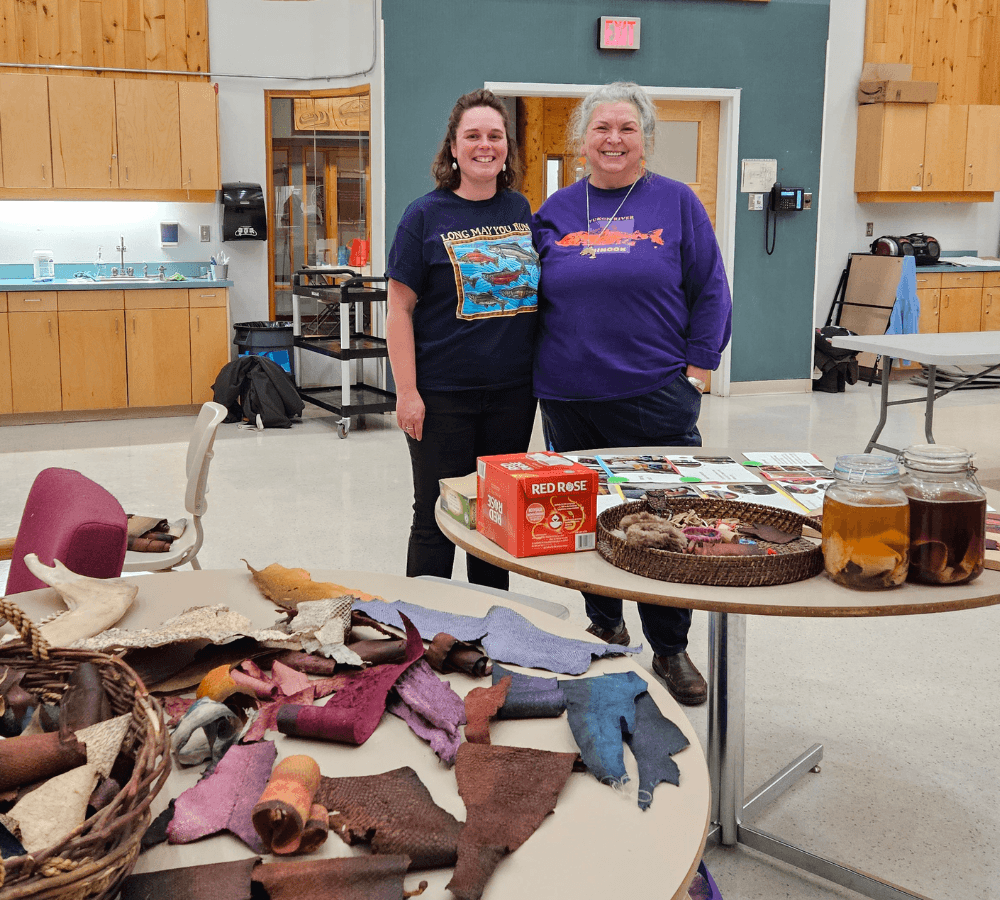
While earlier materials were aimed at teachers, the new booklets are being designed for the students themselves to deepen their connection to salmon beyond the classroom.
“The program’s effect on our school community has been profound. Conversations about salmon science and conservation have continued long after the workshops ended, reflecting [their] lasting influence,” says Ian Dimopolous, a teacher and workshop recipient in Whitehorse.
Across a rapidly changing territory, Rivers to Ridges is helping ensure that even as salmon populations struggle, local youth understand what’s at stake — and why restoring these fish matters.

