Global conservation coalition issues joint statement: ‘Wild salmon need healthy rivers now’
May 29, 2026
Wild salmon need healthy rivers now
Early summer marks the start of prime habitat restoration season across the Northern Hemisphere. After most young salmon depart for the ocean, but before adults return to spawn in the fall and winter, is the time for action in salmon rivers.
On June 1st, International Wild Salmon Day, a global coalition of conservation organizations is sending a clear message: restoring salmon rivers can’t wait.
Salmon are facing death by a thousand cuts, and habitat degradation is one of the deepest wounds.
In 2025, the numbers for wild Atlantic salmon returning to the United Kingdom and Eastern North America were among the lowest in recorded history. Two-thirds of Pacific salmon populations in B.C. and the Yukon are in long-term decline, a trend mirrored across the Pacific Northwest.
‘’It’s easy to think about wild salmon in terms of local problems, but their problems aren’t local — they’re found across the globe. This year’s call to action for greater scale and urgency for habitat restoration is a critical message. The Atlantic Salmon Trust and our partners are driving forward a growing network of catchment-scale restoration programmes across the UK, but wild salmon need us to go further, faster. Working with our wider partners across the Atlantic and Pacific is how we turn individual action into a collective, global movement,’’ says Mark Bilsby, CEO of the Atlantic Salmon Trust.
Freshwater salmon habitats have been severely disturbed across the Northern Hemisphere by urban development, resource extraction, and other human activities. Climate change is increasingly compounding these pressures, with extreme drought, flooding, and wildfires in salmon habitat making headlines.
When these habitats break down, salmon pay the price. So do the Indigenous and coastal communities whose cultures, food systems, and livelihoods depend on these fish.
“Communities are reconnecting rivers, rebuilding estuaries, and replanting riverbanks because when habitat is restored, salmon have a chance to return. First Nations have a right to fish, but that right is only meaningful if there are fish left to exercise it. This June 1 is more than a day of awareness; it is a call to support the habitat restoration work that is making a difference and protecting the future of the fishery,” says Stu Barnes, Executive Director of the First Nations Fisheries Council of BC.
There is still hope. After years of closures, recreational fishing opportunities reopened for Fraser River sockeye in British Columbia in 2025. Salmon once thought lost are returning to the upper Klamath Basin following dam removals in California and Oregon. From a devastating low of 500 adult Chinook in 2009, community-led initiatives in the Cowichan River on Vancouver Island, B.C. have led to fish returns in the tens of thousands.
“Pacific salmon are remarkably resilient. When given the chance to rebound, we’ve seen them show signs of recovery against incredible odds. Now is the time to take a whole-system approach to restoration — from mountain to sea — so that salmon can return to the best possible conditions after surviving a gauntlet of challenges. It will take all of us to ensure healthy salmon for future generations,” says Michael Meneer, CEO and President, Pacific Salmon Foundation.
International Wild Salmon Day has joined the UN Decade on Ecosystem Restoration, which aims to prevent, halt and reverse the degradation of ecosystems on every continent and in the ocean.
Habitat restoration works. Reconnecting rivers, rewilding streams, and rebuilding estuaries is helping salmon recover. However, restoration efforts must keep pace with the vast and many challenges salmon encounter.
“Wild Atlantic salmon have demonstrated their resilience to the natural environment for millennia, but now they need our help more than ever. From targeted land and water protections, to ambitious dam removals, the Atlantic Salmon Federation and our partners are giving wild salmon access to the cold, clean water they need to thrive for generations to come,” says Nathan Wilbur, President of the Atlantic Salmon Federation.
Restoration success stories show us what’s possible. But we need more of them, and fast.
Salmon start and end their lives in freshwater habitats. By giving them the best possible start in life, and the best possible spawning conditions to create the next generation, we can help them overcome the many other challenges they face. Now is the time to scale up investments, mobilize communities, and get to work.
Restoration season is here. The Pacific Salmon Foundation, First Nations Fisheries Council of BC, Atlantic Salmon Federation, and Atlantic Salmon Trust are calling on governments, communities, and individuals to recognize Wild Salmon Day — and to restore salmon rivers before it’s too late.
Raise the flag at WildSalmonDay.com.
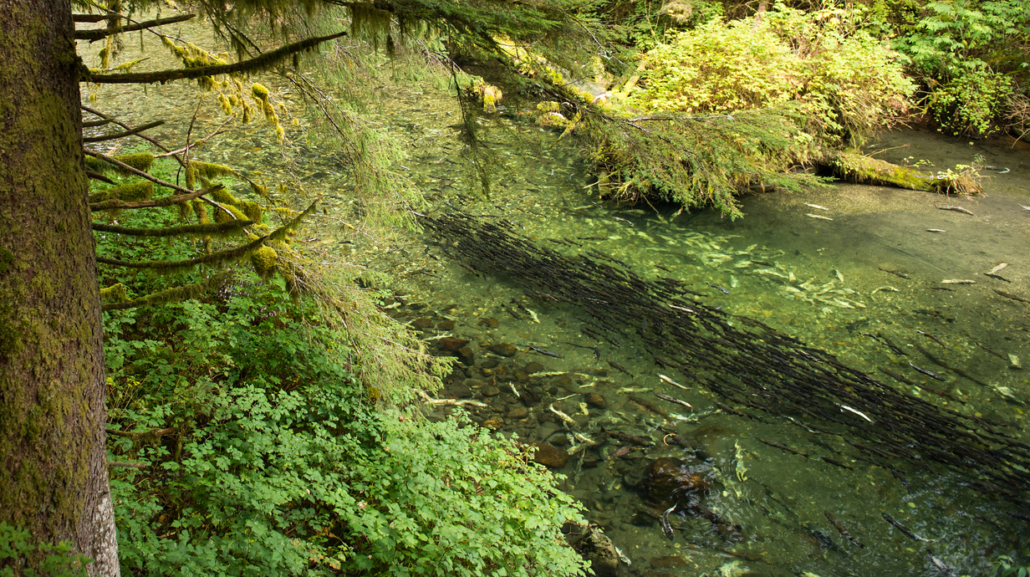
Photo credit: Tavish Campbell
MEDIA INQUIRIES: Please contact Chloë Fraser, Communications Coordinator, Pacific Salmon Foundation, cfraser@psf.ca, (604) 664-7664 ext. 1014.

