Grants & Resource Mobilization
Funding on-the-ground solutions for salmon, from community-led restoration to rapid emergency response.

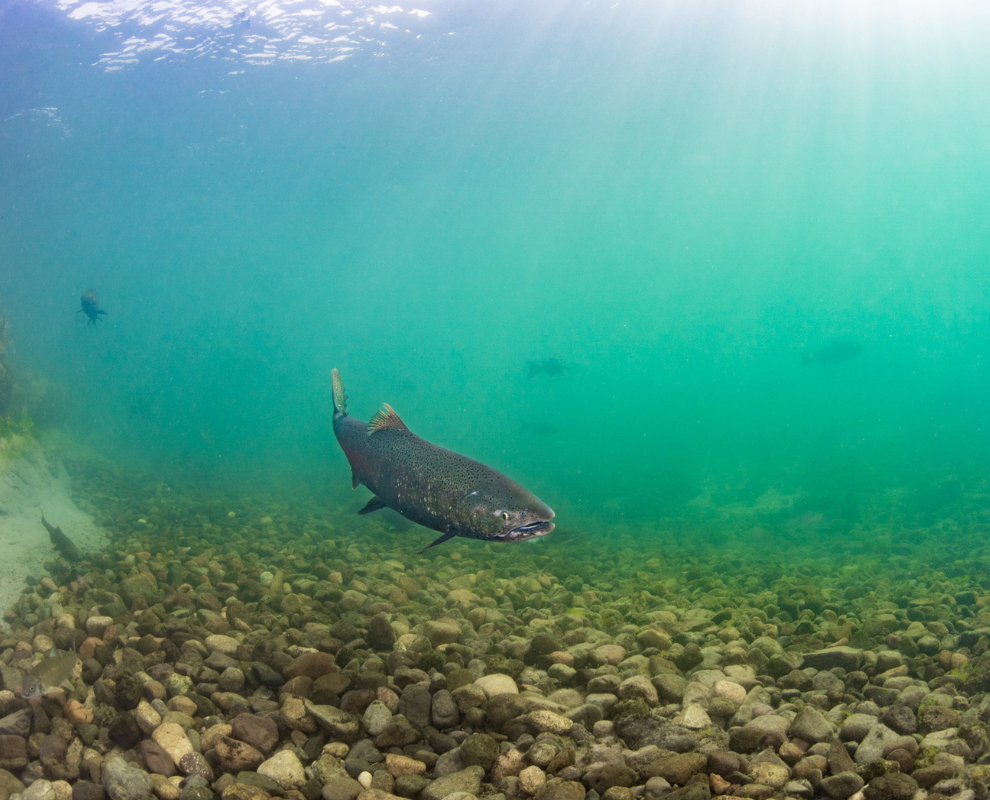
When given the opportunity, salmon can rebound. On Vancouver Island, Cowichan River Chinook returns have recently reached record highs after falling to just 500 natural spawners in 2009. In B.C.’s Interior, Indigenous-led efforts have helped Columbia sockeye make a remarkable comeback after nearly going extinct less than three decades ago. Where salmon are recovering, a common thread emerges: coordinated plans, sustained investment, and partners working together on the ground.
The Pacific Salmon Foundation is taking action. We are developing and advancing recovery plans that pinpoint the factors impacting salmon in high-priority watersheds, and we are supporting the people working to recover salmon in their local rivers. We aren’t going it alone: PSF partners with a network of First Nations and community leaders across B.C. and the Yukon.
Through targeted funding, we help First Nations and community stewards improve habitat and rebuild salmon runs. When emergencies strike, like low water or landslides that cut off migration, we fast-track funding so crews can respond quickly. Through our Game Changer funding, we also help advance large-scale projects to restore vital salmon rivers and nearshore habitats.
Recovery is a long-term effort. Guided by science and local knowledge, we’re working with partners to give more salmon populations the opportunity they need to rebound.
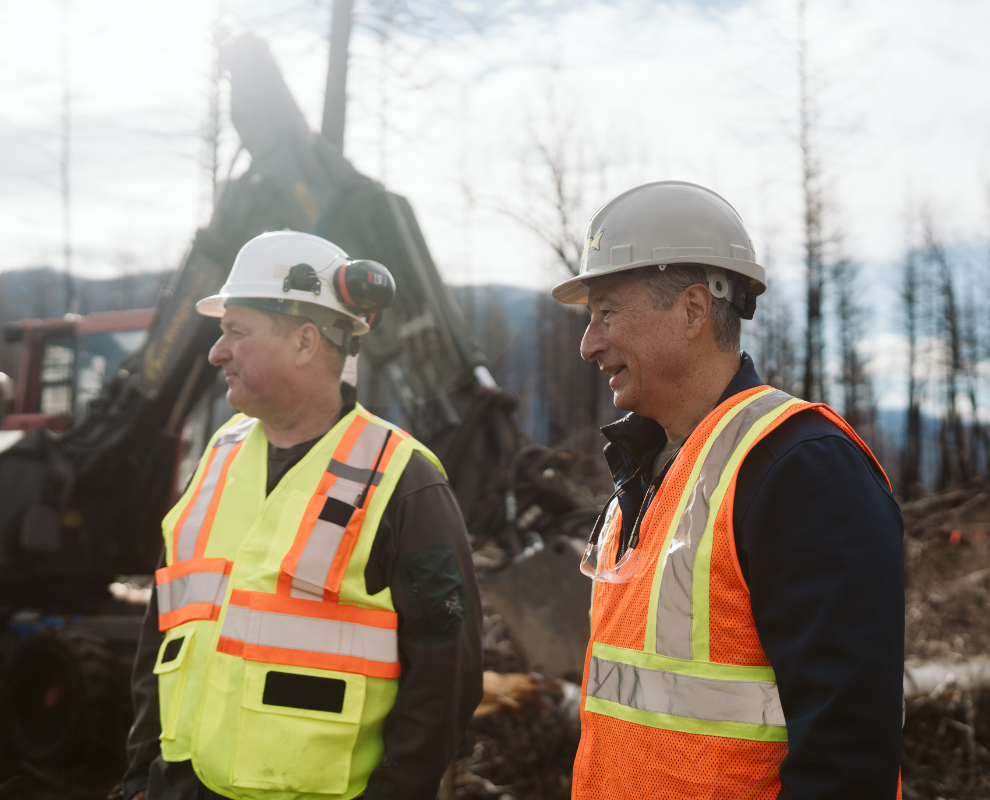
Recovery depends on a clear plan and on everyone pulling in the same direction. With the Upper Fraser Fisheries Conservation Alliance, we’re developing a recovery plan for at-risk Upper Fraser Chinook, building a toolkit other watersheds can use, and identifying where planning is needed most. With the First Nations Fisheries Council, we’re shaping a shared approach to recovery across the province. Our regional recovery coordinators support First Nations, governments, and stewardship groups on the ground.
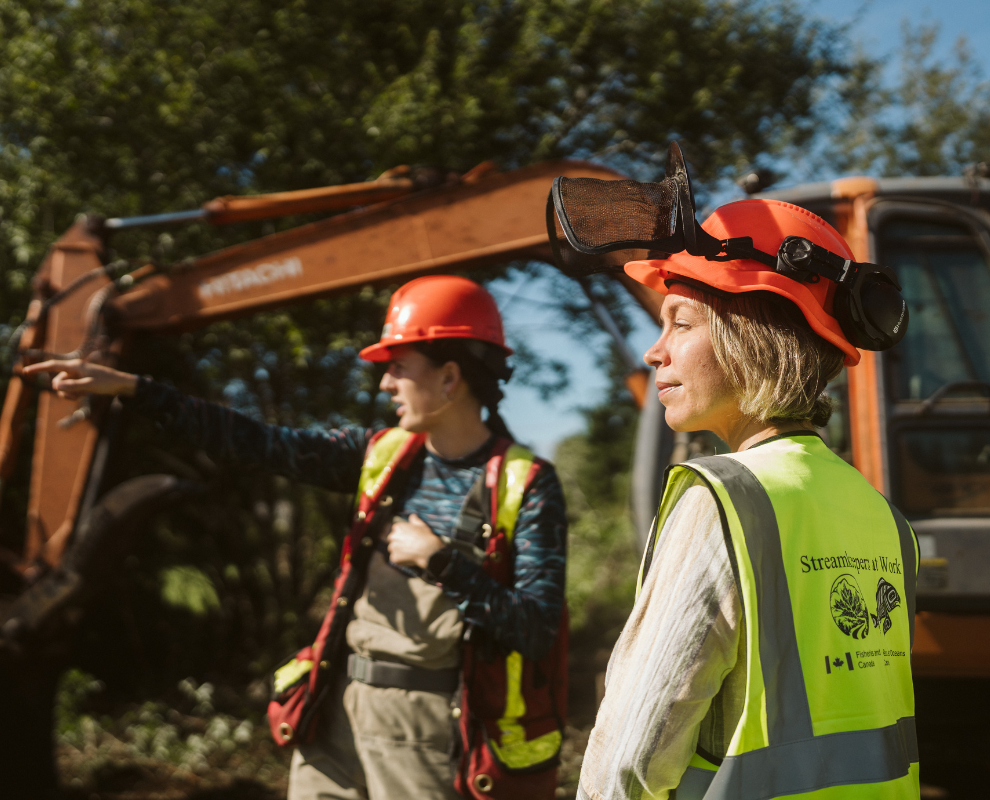
Local stewards have deep knowledge of their rivers. Twice a year, our Community Salmon Program, supported by the Salmon Conservation Stamp and donors, awards grants to First Nations and community stewards. Since 1994, it has funded thousands of projects across B.C. and the Yukon. For larger restoration projects in major salmon rivers, our Game Changer funding helps partners scale up and get the job done. We also offer bursaries to students pursuing careers in salmon conservation and restoration.

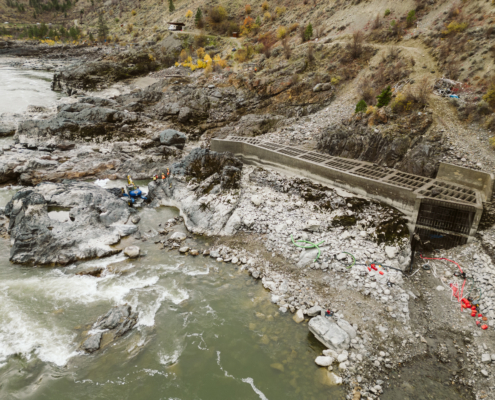
Droughts, floods, wildfires, and landslides are becoming more frequent, and they can put salmon at immediate risk. Through our Climate Emergency Fund, we provide rapid funding for urgent restoration and emergency actions, and work with government and community partners to coordinate the response, from assessing impacts to helping habitat recover. This fund has helped rescue salmon blocked by flood debris or stranded when rivers run dry.
Near Muchalat Lake on Vancouver Island, threatened Chinook lacked high-quality spawning habitat. In 2025, a partnership led by the Nootka Sound Watershed Society and Ecofish Research, with the Mowachaht/Muchalaht First Nation, built 200 metres of new spawning habitat expected to support 1,000 to 2,000 spawning Chinook each year. Our Game Changer funding helped make it happen.
Near Muchalat Lake on Vancouver Island, threatened Chinook lacked high-quality spawning habitat. In 2025, a partnership led by the Nootka Sound Watershed Society and Ecofish Research, with the Mowachaht/Muchalaht First Nation, built 200 metres of new spawning habitat expected to support 1,000 to 2,000 spawning Chinook each year. Our Game Changer funding helped make it happen.
 https://psf.ca/wp-content/uploads/2026/05/2023-10-17_Bridge-Rapids_Brandon-Deepwell-8-scaled.jpg
1920
2560
Oscar Beardmore-Gray
/wp-content/uploads/2022/04/PSF-Logo-2022-min.png
Oscar Beardmore-Gray2026-06-05 12:03:252026-07-09 11:37:32Warm winter, low snowpack on B.C.’s south coast put salmon at risk this summer
https://psf.ca/wp-content/uploads/2026/05/2023-10-17_Bridge-Rapids_Brandon-Deepwell-8-scaled.jpg
1920
2560
Oscar Beardmore-Gray
/wp-content/uploads/2022/04/PSF-Logo-2022-min.png
Oscar Beardmore-Gray2026-06-05 12:03:252026-07-09 11:37:32Warm winter, low snowpack on B.C.’s south coast put salmon at risk this summer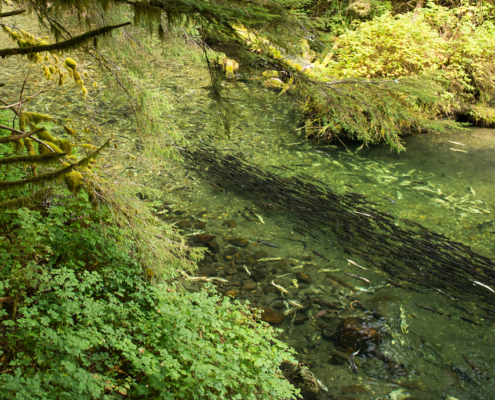 https://psf.ca/wp-content/uploads/2026/05/i-zc7WGXJ-X3-e1780071882298.jpg
690
1232
Chloe Fraser
/wp-content/uploads/2022/04/PSF-Logo-2022-min.png
Chloe Fraser2026-05-29 09:12:432026-05-29 12:13:23Global conservation coalition issues joint statement: ‘Wild salmon need healthy rivers now’
https://psf.ca/wp-content/uploads/2026/05/i-zc7WGXJ-X3-e1780071882298.jpg
690
1232
Chloe Fraser
/wp-content/uploads/2022/04/PSF-Logo-2022-min.png
Chloe Fraser2026-05-29 09:12:432026-05-29 12:13:23Global conservation coalition issues joint statement: ‘Wild salmon need healthy rivers now’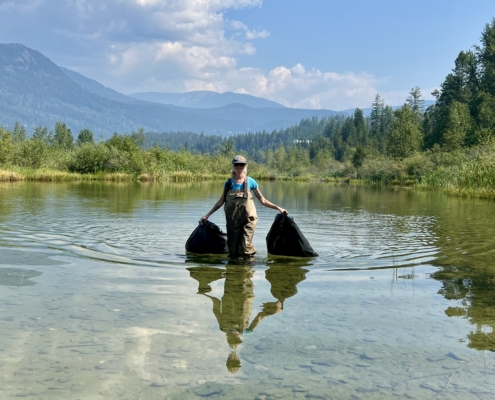 https://psf.ca/wp-content/uploads/2026/05/BirdCreekMarsh_YFIremoval_CKISS_FY2025-scaled.jpg
2560
1920
Chloe Fraser
/wp-content/uploads/2022/04/PSF-Logo-2022-min.png
Chloe Fraser2026-05-21 09:13:372026-08-20 11:49:27$1.9M released for salmon conservation after record demand
https://psf.ca/wp-content/uploads/2026/05/BirdCreekMarsh_YFIremoval_CKISS_FY2025-scaled.jpg
2560
1920
Chloe Fraser
/wp-content/uploads/2022/04/PSF-Logo-2022-min.png
Chloe Fraser2026-05-21 09:13:372026-08-20 11:49:27$1.9M released for salmon conservation after record demand